


Colonial Acres Coins
SKU: SKU:WC-6710
Hawaii 1883 1/4 Dollar VF-EF (VF30)
Hawaii 1883 1/4 Dollar VF-EF (VF30)
Regular price
$189.00
Regular price
$210.00
Sale price
$189.00
Unit price
per
We buy at $0.00
Shipping calculated at checkout.
◎ 1 Available
Couldn't load pickup availability

FREE SHIPPING OVER $500
Hawaii 1883 1/4 Dollar VF-EF (VF30)
Kal?kaua, often called the “Merrie Monarch,” was the last reigning king of the Kingdom of Hawaii. His reign was marked by a revival of Hawaiian culture, including the restoration of traditional practices such as hula, which had been discouraged by earlier missionary influence. Kal?kaua also sought to strengthen Hawaii’s independence by fostering diplomatic ties with other nations and promoting a vision of Polynesian unity. At home, he commissioned the construction of Iolani Palace, a symbol of both national pride and modern statehood. However, his rule was challenged by powerful foreign business interests and internal political pressures that increasingly limited his authority.
During the 1880s, the influence of American and European settlers—particularly those tied to the sugar industry—grew significantly, often at the expense of Hawaiian sovereignty, and formed the "Hawaiian League". The Hawaiian League, also known as the Annexation Club, were a 13-member group composed of mostly Hawaiian subjects of American descent and American citizens. In 1887, these interests forced Kal?kaua to accept the so-called Bayonet Constitution, which drastically reduced the king’s powers and imposed property and income requirements that disenfranchised many Native Hawaiians while empowering foreign elites. Immediately following the adoption of the Bayonet Constitution, the Native Hawaiian population sought to restore King Kalakaua's power and authority. A committee of Hawaiians met with Kalakaua to discuss dismantling the constitution as the King had signed it under duress. Several petitions circulated, drawing 6,500 signatures out of the 9,500 registered voters, and based on this, Queen Liliuokalani proposed the removal of power from the legislature in January of 1893 by a new constitution that would restore the absolute monarchy. In response, the Hawaiian League overthrew her monarchy, and the legislature took control of the country. Hawaii was formally annexted by the United States on August 12, 1898.
Obverse: Bust of Kalakaua I Facing right, with the date below and the legend around.
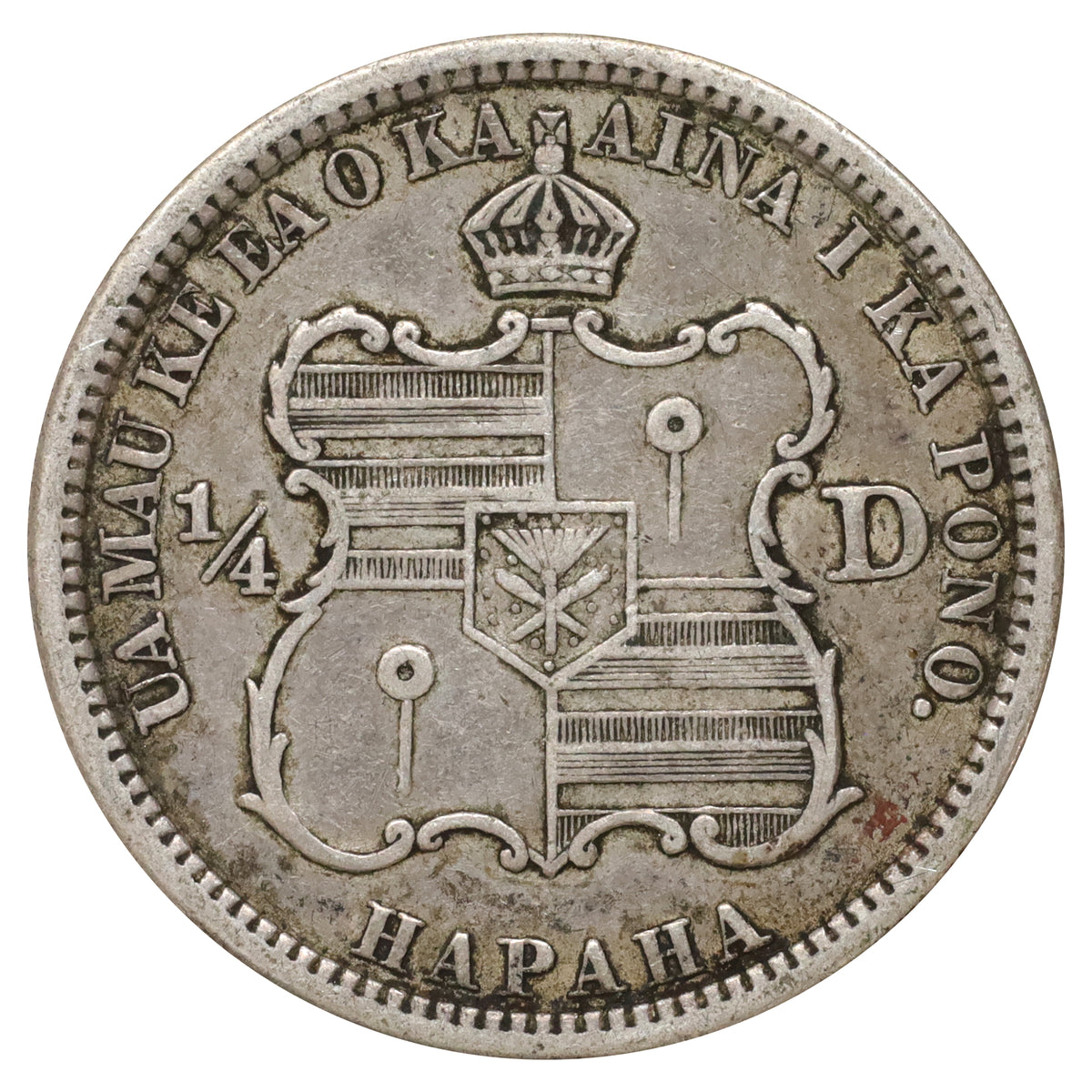
The crowned Arms of Hawaii divides the denomination, with the legend around.
Specifications:
Monarch: Kalakaua (1874-1891)
Engraver: Charles Edward Barber
Composition: 0.900 Silver, 0.100 Copper
Weight: 6.3 g
Diameter: 24.3 mm
Edge: Reeded
Die Axis: ↑↓
Mint: The United States Mint of San Francisco, United States
Mintage: 500,000
Kal?kaua, often called the “Merrie Monarch,” was the last reigning king of the Kingdom of Hawaii. His reign was marked by a revival of Hawaiian culture, including the restoration of traditional practices such as hula, which had been discouraged by earlier missionary influence. Kal?kaua also sought to strengthen Hawaii’s independence by fostering diplomatic ties with other nations and promoting a vision of Polynesian unity. At home, he commissioned the construction of Iolani Palace, a symbol of both national pride and modern statehood. However, his rule was challenged by powerful foreign business interests and internal political pressures that increasingly limited his authority.
During the 1880s, the influence of American and European settlers—particularly those tied to the sugar industry—grew significantly, often at the expense of Hawaiian sovereignty, and formed the "Hawaiian League". The Hawaiian League, also known as the Annexation Club, were a 13-member group composed of mostly Hawaiian subjects of American descent and American citizens. In 1887, these interests forced Kal?kaua to accept the so-called Bayonet Constitution, which drastically reduced the king’s powers and imposed property and income requirements that disenfranchised many Native Hawaiians while empowering foreign elites. Immediately following the adoption of the Bayonet Constitution, the Native Hawaiian population sought to restore King Kalakaua's power and authority. A committee of Hawaiians met with Kalakaua to discuss dismantling the constitution as the King had signed it under duress. Several petitions circulated, drawing 6,500 signatures out of the 9,500 registered voters, and based on this, Queen Liliuokalani proposed the removal of power from the legislature in January of 1893 by a new constitution that would restore the absolute monarchy. In response, the Hawaiian League overthrew her monarchy, and the legislature took control of the country. Hawaii was formally annexted by the United States on August 12, 1898.
Obverse: Bust of Kalakaua I Facing right, with the date below and the legend around.
The crowned Arms of Hawaii divides the denomination, with the legend around.
Specifications:
Monarch: Kalakaua (1874-1891)
Engraver: Charles Edward Barber
Composition: 0.900 Silver, 0.100 Copper
Weight: 6.3 g
Diameter: 24.3 mm
Edge: Reeded
Die Axis: ↑↓
Mint: The United States Mint of San Francisco, United States
Mintage: 500,000