


Colonial Acres Coins
SKU: SKU:Sept.DOD-R384
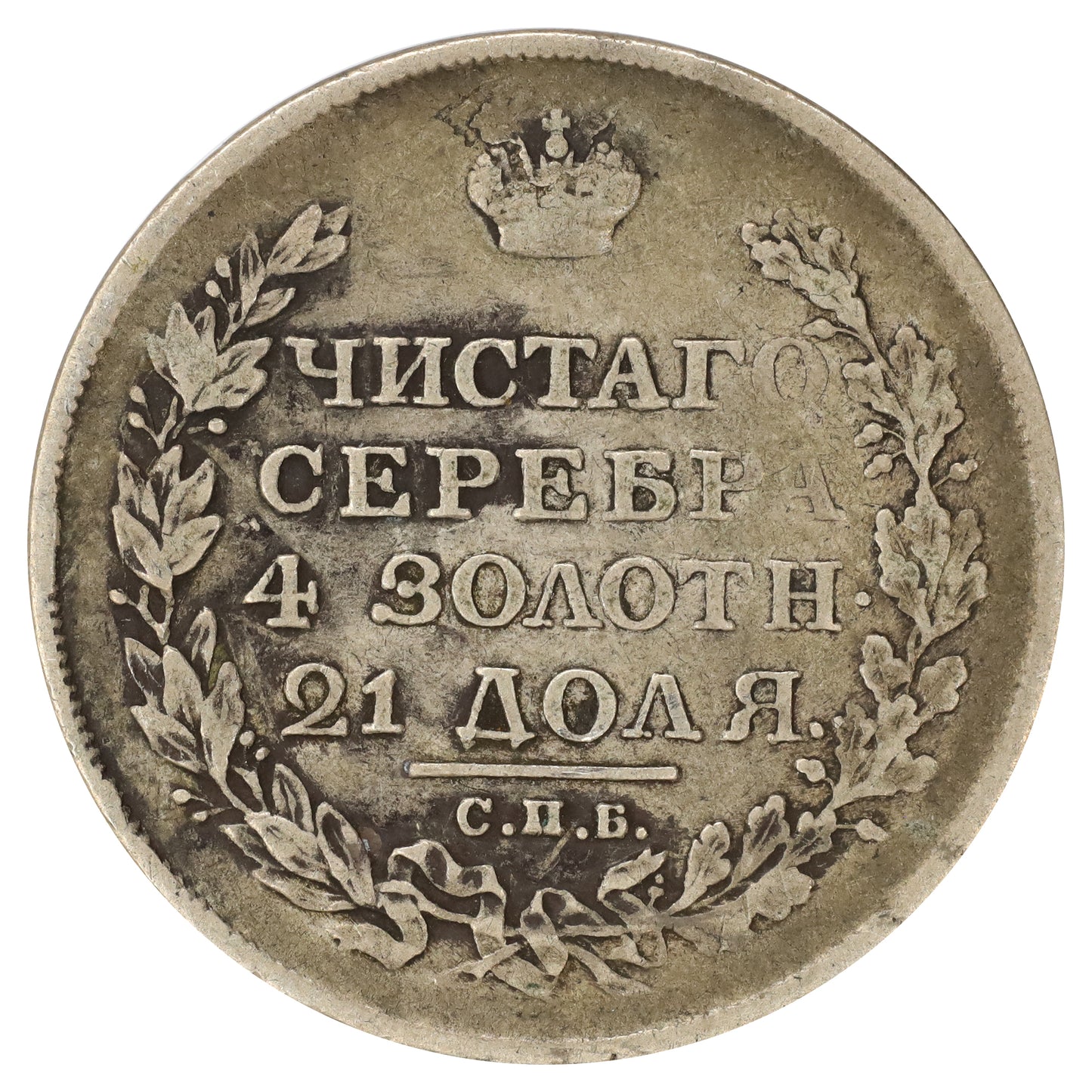
Russia 1818 Alexander I 1 Ruble Very Fine (VF20) toned
Russia 1818 Alexander I 1 Ruble Very Fine (VF20) toned
Regular price
$179.95
Regular price
Sale price
$179.95
Unit price
per
We buy at $0.00
Shipping calculated at checkout.
◎ 1 Available
Couldn't load pickup availability

FREE SHIPPING OVER $500
Russia 1818 Alexander I 1 Ruble Very Fine (VF20) toned
Alexander I was Tsar of Russia during the utter havoc of the Napoleonic Wars. Raised by his grandmother, Catherine the Great, he followed his father to the throne in 1801 at just 14 years old. The Russian social hierarchy in this period was strict, and Alexander's rule was absolute. Though he often spoke with the popular liberal rhetoric of an Enlightenment leader, the reality was that Alexander was both a nationalist and a Slavophile (that is, he believed that Russia should reject Western European culture), and he sought to maintain -- and even strengthen -- the status quo. With the rise of Napoleon, he danced around Russia's position towards France before finally joining with Britain, Austria, and others in opposition. This would become the War of the Third Coalition, and, as any reader of Tolstoy will tell you, the outcome was rather mixed. Austerlitz and Friedland were such utter disasters that the Russian army lost upwards of 47,000 men in those two battles alone. Alexander switched sides, then switched sides again. The next time he and Napoleon clashed was during the latter's disastrous invasion of Russia. The Russian tactic was simply to fall back and back, abandoning and burning their cities, stretching Napoleon's supply lines until his army began falling apart. Between the weather, disease, and guerrilla warfare, Napoleon lost 380,000 troops -- utterly catastrophic, both to the army and to Napoleon's reputation for invincibility. The Russian army lost about as many, but being part of the winning side meant Alexander gained territory in Poland. In his later years, he became increasingly conservative, paranoid and autocratic, ending many of the reforms he agreed to earlier in his reign. He died in 1825 of typhus, and the throne passed to his younger brother Nicholas I.
Russian rubles in this period were made from .868 silver and weighed just under 21 grams. The double-headed eagle was a Russian symbol of unity and imperialism since the 15th century. The heads look east and west, towards Europe and Asia.
Alexander I was Tsar of Russia during the utter havoc of the Napoleonic Wars. Raised by his grandmother, Catherine the Great, he followed his father to the throne in 1801 at just 14 years old. The Russian social hierarchy in this period was strict, and Alexander's rule was absolute. Though he often spoke with the popular liberal rhetoric of an Enlightenment leader, the reality was that Alexander was both a nationalist and a Slavophile (that is, he believed that Russia should reject Western European culture), and he sought to maintain -- and even strengthen -- the status quo. With the rise of Napoleon, he danced around Russia's position towards France before finally joining with Britain, Austria, and others in opposition. This would become the War of the Third Coalition, and, as any reader of Tolstoy will tell you, the outcome was rather mixed. Austerlitz and Friedland were such utter disasters that the Russian army lost upwards of 47,000 men in those two battles alone. Alexander switched sides, then switched sides again. The next time he and Napoleon clashed was during the latter's disastrous invasion of Russia. The Russian tactic was simply to fall back and back, abandoning and burning their cities, stretching Napoleon's supply lines until his army began falling apart. Between the weather, disease, and guerrilla warfare, Napoleon lost 380,000 troops -- utterly catastrophic, both to the army and to Napoleon's reputation for invincibility. The Russian army lost about as many, but being part of the winning side meant Alexander gained territory in Poland. In his later years, he became increasingly conservative, paranoid and autocratic, ending many of the reforms he agreed to earlier in his reign. He died in 1825 of typhus, and the throne passed to his younger brother Nicholas I.
Russian rubles in this period were made from .868 silver and weighed just under 21 grams. The double-headed eagle was a Russian symbol of unity and imperialism since the 15th century. The heads look east and west, towards Europe and Asia.