


Colonial Acres Coins
SKU: SKU:xDOD-R347
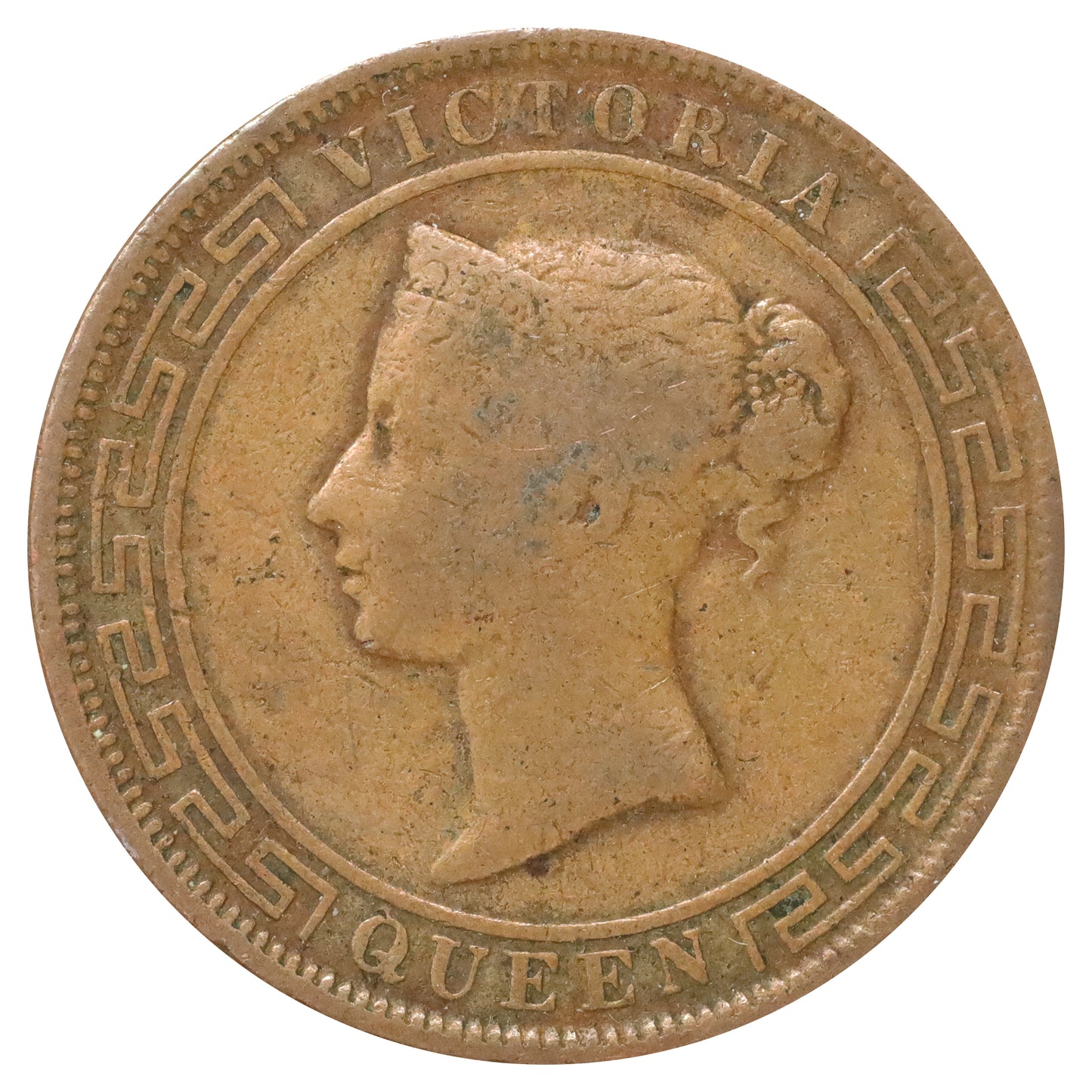
Ceylon 1890 Victoria 5 Cents Fine (F12) DOD
Ceylon 1890 Victoria 5 Cents Fine (F12) DOD
Regular price
$19.95
Regular price
Sale price
$19.95
Unit price
per
We buy at $0.00
Shipping calculated at checkout.
◎ 1 Available
Couldn't load pickup availability

FREE SHIPPING OVER $500
Ceylon 1890 Victoria 5 Cents Fine (F12) DOD
When the classical Persians encountered the island of Sri Lanka, they named it Sarand?b -- and this name became the root of the word "serendipity," meaning an unplanned but fortunate discovery. It is an apt name for a beautiful country that seems to have stunned everyone who has had the pleasure of encountering it. For many years, Sri Lanka was the source of cinnamon, which travelled with Arab and Persian traders down the Silk Road to Europe. It is also the oldest continuous Buddhist civilization in the world and represents the heart of the religion for many Southeast Asians. Among its many significant Buddhist landmarks is the Sacred Bodhi tree, which is over 2,300 years old. Of course, this richness in culture and resources, paired with its small size, has made Sri Lanka a target for foreign invasion for about two thousand years. Most incursions came from its much larger maritime neighbour, India -- but, as soon as European colonial powers discovered it, they started fighting over it too.
In 1890, Sri Lanka was under the thumb of the British Empire. The British called it Ceylon, based on the Portuguese name Ceilão, and they used it for plantation agriculture. Coffee, tea, rubber, coconut, and, of course, cinnamon were all exported from Ceylon harbours. During World War II, Ceylon was the launchpad for the British against the Japanese. UK Parliament passed the Ceylon Independence Act shortly after the war, granting Sri Lanka independence in 1947. It remains a Commonwealth nation today.
This Victorian Ceylon coin features a bust of Queen Victoria on the obverse, facing left. The reverse shows a palm tree, with text in Latin, Sinhala, and Tamil script.
When the classical Persians encountered the island of Sri Lanka, they named it Sarand?b -- and this name became the root of the word "serendipity," meaning an unplanned but fortunate discovery. It is an apt name for a beautiful country that seems to have stunned everyone who has had the pleasure of encountering it. For many years, Sri Lanka was the source of cinnamon, which travelled with Arab and Persian traders down the Silk Road to Europe. It is also the oldest continuous Buddhist civilization in the world and represents the heart of the religion for many Southeast Asians. Among its many significant Buddhist landmarks is the Sacred Bodhi tree, which is over 2,300 years old. Of course, this richness in culture and resources, paired with its small size, has made Sri Lanka a target for foreign invasion for about two thousand years. Most incursions came from its much larger maritime neighbour, India -- but, as soon as European colonial powers discovered it, they started fighting over it too.
In 1890, Sri Lanka was under the thumb of the British Empire. The British called it Ceylon, based on the Portuguese name Ceilão, and they used it for plantation agriculture. Coffee, tea, rubber, coconut, and, of course, cinnamon were all exported from Ceylon harbours. During World War II, Ceylon was the launchpad for the British against the Japanese. UK Parliament passed the Ceylon Independence Act shortly after the war, granting Sri Lanka independence in 1947. It remains a Commonwealth nation today.
This Victorian Ceylon coin features a bust of Queen Victoria on the obverse, facing left. The reverse shows a palm tree, with text in Latin, Sinhala, and Tamil script.