


Colonial Acres Coins
SKU: SKU:Mega70-KB1735
Ancient Rome 317-324 Licinius II Bronze Coin
Ancient Rome 317-324 Licinius II Bronze Coin
Regular price
$27.05
Regular price
Sale price
$27.05
Unit price
per
We buy at $0.00
Shipping calculated at checkout.
◎ 1 Available
Couldn't load pickup availability

FREE SHIPPING OVER $500
Ancient Rome 317-324 Licinius II Bronze Coin
The entire third century had been an utter disaster for Rome, marked by a seemingly endless procession of civil wars set against a backdrop of border raids, financial strife, climate change, and plague. The solution that finally brought some stability had been the Tetrarchy -- a four-way split that divided the empire into smaller, more manageable sections. It did not last. By the dawn of the fourth century, the Tetrarchy was at war with itself, with several powerful rivals contending for sole rule of a reunited Rome.
There were seven major players: Maximian, Galerius, Maximinus, Severus, Maxentius, Constantine, and Licinius. All were technically emperors. Licinius was a friend of Galerius, who was one of the original four members of the Tetrarchy, and the intent was to have him rule the Western half of the empire. Two small problems: Maxentius was occupying most of it, and Constantine was squatting on the rest. Constantine solved the first problem by putting Maxentius down at the Battle of Milvian Bridge, and then Licinius solved the second by marrying Constantine's sister. Then, Licinius turned east and beat Maximinus into submission at Tzurulum. The last two standing, Licinius and Constantine, scrapped for dominance, but they ended up locking themselves in a stalemate. An uneasy peace was achieved.
Licinius' son, also Licinius, was born into this. He was raised to be his father's co-emperor in 317, when he was just twenty months old. This sounds absurd, but it was done in response to Constantine raising his own son, Crispus, to be his co-emperor. Crispus was seventeen -- young, but old enough to be a political threat. By giving little Licinius the same promotion on the same day (even if he was a literal baby) Licinius denied Crispus imperial seniority over his son. It might have made a difference, had the next generation lived long enough to come to blows.
In 324, Licinius Senior lost to Constantine and Crispus twice: at sea, in the Battle of the Hellespont, and on land, at the Battle of Chrysopolis. Licinius surrendered. Both he and his son were put to death (and so, in fact, was Crispus), and Constantine became the sole ruler of the Roman Empire.
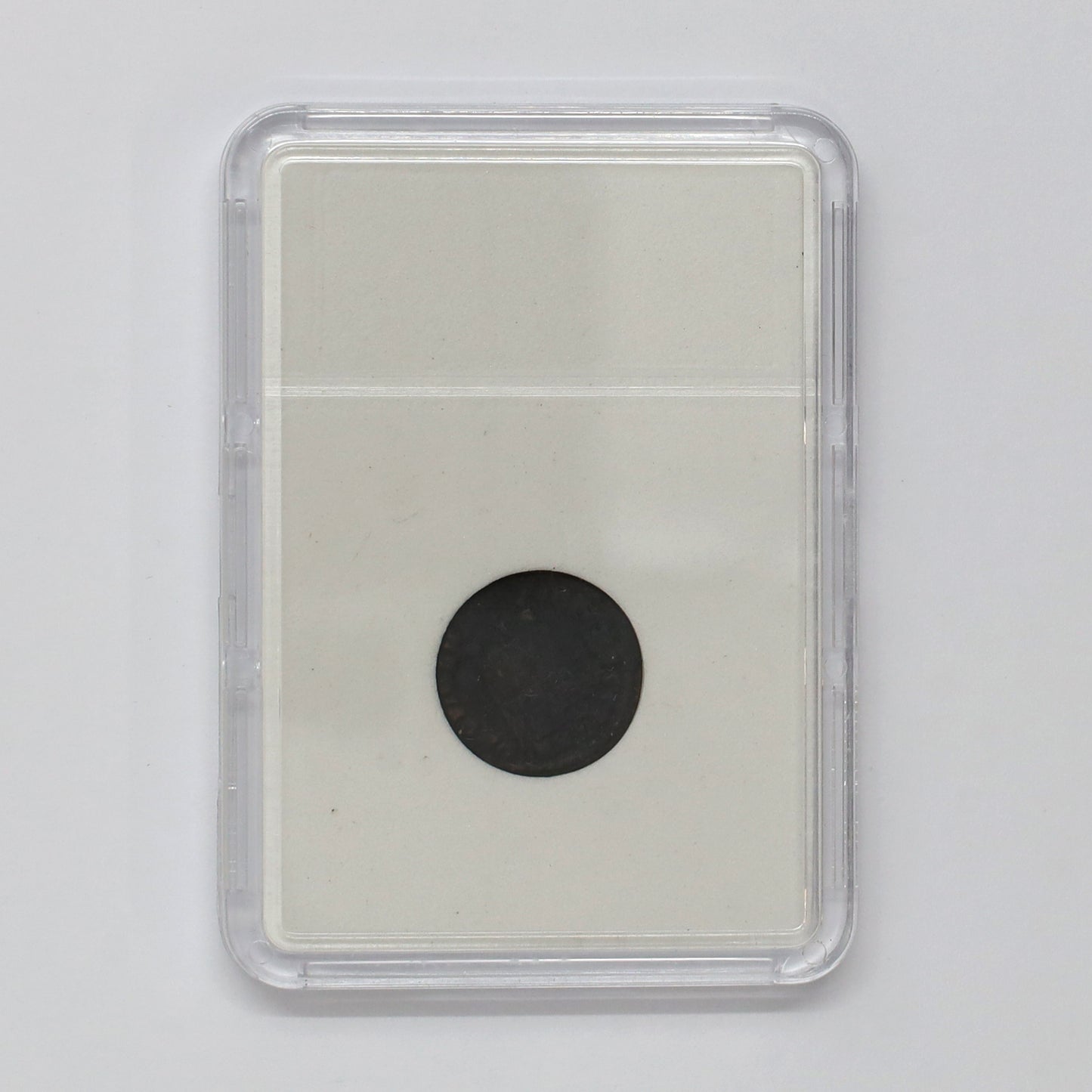
The story of Constantine and his many rivals is an intense one, stuffed with enough drama, betrayal, and violence to fill several seasons of prestige TV. Licinius was his final hurdle to becoming the Constantine the Great that history remembers. He brought his unfortunate son along for the ride, and, as a result, Licinius II lived to be only eleven years old. This bronze coin features the child emperor's tiny bust, a testament to the wildly uncertain politial landscape of the fourth century.
The entire third century had been an utter disaster for Rome, marked by a seemingly endless procession of civil wars set against a backdrop of border raids, financial strife, climate change, and plague. The solution that finally brought some stability had been the Tetrarchy -- a four-way split that divided the empire into smaller, more manageable sections. It did not last. By the dawn of the fourth century, the Tetrarchy was at war with itself, with several powerful rivals contending for sole rule of a reunited Rome.
There were seven major players: Maximian, Galerius, Maximinus, Severus, Maxentius, Constantine, and Licinius. All were technically emperors. Licinius was a friend of Galerius, who was one of the original four members of the Tetrarchy, and the intent was to have him rule the Western half of the empire. Two small problems: Maxentius was occupying most of it, and Constantine was squatting on the rest. Constantine solved the first problem by putting Maxentius down at the Battle of Milvian Bridge, and then Licinius solved the second by marrying Constantine's sister. Then, Licinius turned east and beat Maximinus into submission at Tzurulum. The last two standing, Licinius and Constantine, scrapped for dominance, but they ended up locking themselves in a stalemate. An uneasy peace was achieved.
Licinius' son, also Licinius, was born into this. He was raised to be his father's co-emperor in 317, when he was just twenty months old. This sounds absurd, but it was done in response to Constantine raising his own son, Crispus, to be his co-emperor. Crispus was seventeen -- young, but old enough to be a political threat. By giving little Licinius the same promotion on the same day (even if he was a literal baby) Licinius denied Crispus imperial seniority over his son. It might have made a difference, had the next generation lived long enough to come to blows.
In 324, Licinius Senior lost to Constantine and Crispus twice: at sea, in the Battle of the Hellespont, and on land, at the Battle of Chrysopolis. Licinius surrendered. Both he and his son were put to death (and so, in fact, was Crispus), and Constantine became the sole ruler of the Roman Empire.
The story of Constantine and his many rivals is an intense one, stuffed with enough drama, betrayal, and violence to fill several seasons of prestige TV. Licinius was his final hurdle to becoming the Constantine the Great that history remembers. He brought his unfortunate son along for the ride, and, as a result, Licinius II lived to be only eleven years old. This bronze coin features the child emperor's tiny bust, a testament to the wildly uncertain politial landscape of the fourth century.