


Colonial Acres Coins
SKU: SKU:Aug.Week4.P3-KB1710
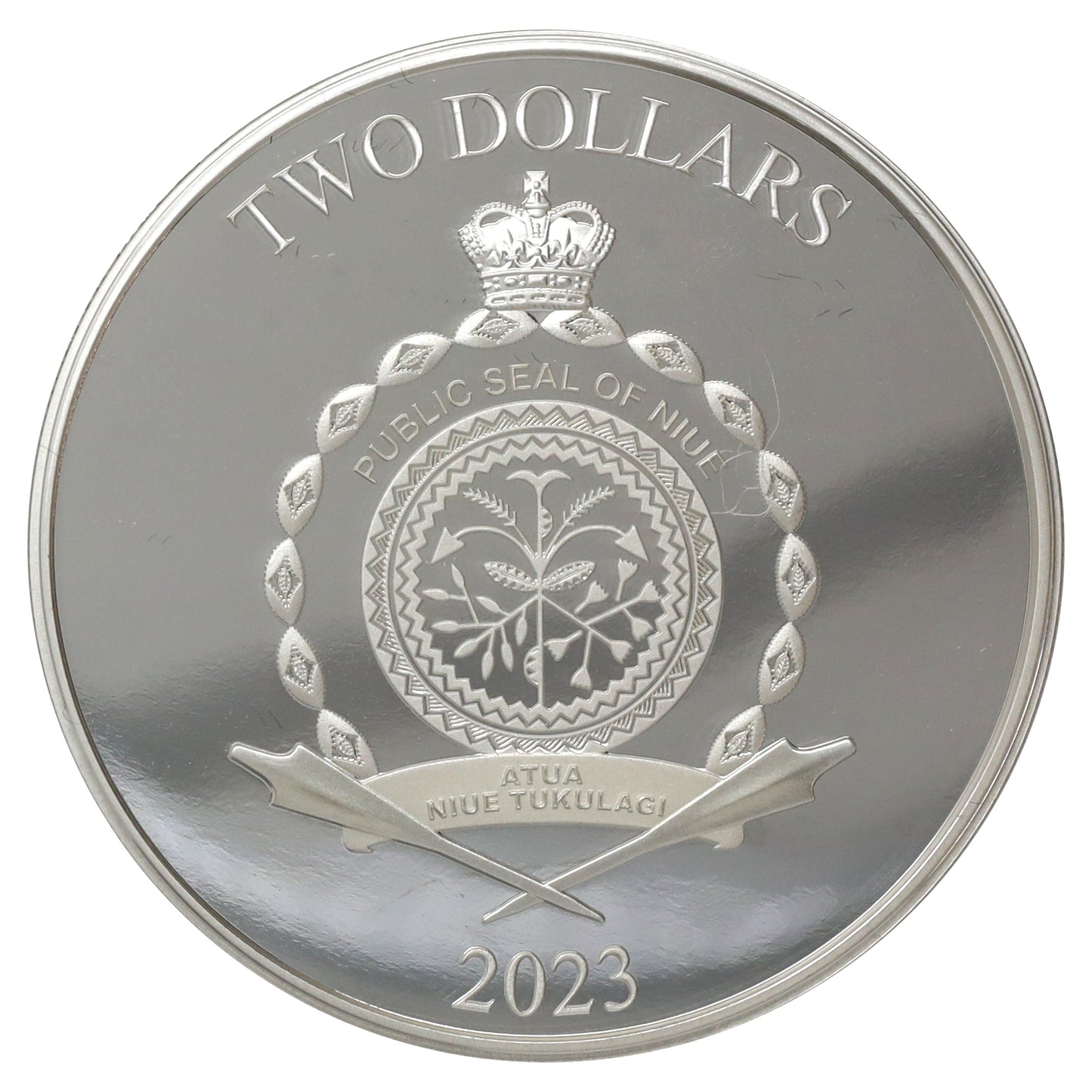
2022 Niue $2 Women in History: Cleopatra 1oz. Fine Silver Coin (No Tax) minor wear
2022 Niue $2 Women in History: Cleopatra 1oz. Fine Silver Coin (No Tax) minor wear
Regular price
$161.45
Regular price
Sale price
$161.45
Unit price
per
We buy at $0.00
Shipping calculated at checkout.
◎ 1 Available
Couldn't load pickup availability

FREE SHIPPING OVER $500
2022 Niue $2 Women in History: Cleopatra 1oz. Fine Silver Coin (No Tax) minor wear
The exotic seductress who manipulated powerful men with her command of sex, luxury, and power; Cleopatra's story has captured the public imagination for centuries. Thousands upon thousands of books, plays, songs, films, and poems are about her. Shakespeare wrote about her; celebrities from Marilyn Monroe to Kim Kardashian have recalled her in glamorous photo shoots; her legacy is the mould for every vamp and femme fatale that has followed her. There are Cleopatra perfumes, skincare lines, cigarettes, and slot machines, because her name is synonymous with extravagance, magnetism, and temptation. Even if you know nothing about ancient Egypt, you doubtlessly have heard of Cleopatra and know that she was three things: beautiful, exotic, and absolutely deadly.
Reality is much more interesting. Cleopatra -- by whom we mean Cleopatra VII -- was the last ruler of Egypt before it became a Roman province. The degree to which she had any Egyptian ancestry is actually a topic of hot-blooded debate amongst historians, as she was a descendant of the Macedonian conquerors who took Egypt from Persia with Alexander the Great, and the Macedonian pharaohs (called the Ptolemies, after their founder Ptolemy I) followed the Egyptian tradition of marriage between siblings. Whatever her blood, Cleopatra ruled and presented herself as Egyptian. She had come to power in 51 BCE with her teenage brother and husband, Ptolemy XIII, but the older and smarter Cleopatra quickly outstripped him in capability and influence. For her efforts, she was exiled. Not one to go quietly, however, Cleopatra appealed to Roman Consul Julius Caesar, famously smuggling herself into his quarters in a rolled-up carpet. 21-year-old Cleopatra became 52-year-old Caesar's lover -- a relationship that has often been interpreted as a passionate love affair -- and gave birth to his only son, Caesarion. It was worth it. Rome was a rising power in Caesar's time, and their powerful army put Ptolemy down and restored Cleopatra to the throne.
It was a Faustian bargain, in the end. Caesar was assassinated in 44 BCE, and suddenly, Cleopatra was without her most powerful ally. The civil war that split Rome in Caesar's wake forced her to pick a side to stay afloat. She chose the general and politician Mark Antony, Caesar's former friend, because he held the Roman territory closer to Egypt, and together they could control the eastern side of the Mediterranean. To seal their alliance, Antony ceded Roman territory to Egypt. This was a major mistake. Practically speaking, it was only a symbolic gesture -- but it made Antony look like a traitor, and soon Romans were whispering about the oriental temptress who had her venomous talons in their stalwart general. Public opinion spun against Antony, the Roman Senate declared war on Cleopatra, and suddenly they were spiralling towards mutual destruction. They were defeated at the Battle of Actium in 31 BCE by the future emperor Augustus. Rather than be taken prisoner, Antony fell on his own sword. Cleopatra, famously, poisoned herself.
The fascinating thing about Cleopatra's legacy is that it has barely evolved since the slander Romans were heaping upon her in her own lifetime. They said she was a vamp, a sexpot, a siren, a Jezebel; that she used her femininity to drip poison in the ears of otherwise respectable men and ensnare them to do her bidding. The reality is that she was a whip-smart politician whose cunning and confidence terrified strictly patriarchal Rome. This was a society where women faded into the background, and here was a queen who wouldn't go away. They say well-behaved women seldom make history -- Cleopatra embodies that wholly and entirely.
The Women in History collection celebrates some of history's worst-behaved -- and, therefore, greatest -- women. Selectively colourized and crafted from 99.99% silver, each coin features a beautiful portrait that recalls feminist history. This one features Cleopatra, posed powerfully and in full royal regalia.
The exotic seductress who manipulated powerful men with her command of sex, luxury, and power; Cleopatra's story has captured the public imagination for centuries. Thousands upon thousands of books, plays, songs, films, and poems are about her. Shakespeare wrote about her; celebrities from Marilyn Monroe to Kim Kardashian have recalled her in glamorous photo shoots; her legacy is the mould for every vamp and femme fatale that has followed her. There are Cleopatra perfumes, skincare lines, cigarettes, and slot machines, because her name is synonymous with extravagance, magnetism, and temptation. Even if you know nothing about ancient Egypt, you doubtlessly have heard of Cleopatra and know that she was three things: beautiful, exotic, and absolutely deadly.
Reality is much more interesting. Cleopatra -- by whom we mean Cleopatra VII -- was the last ruler of Egypt before it became a Roman province. The degree to which she had any Egyptian ancestry is actually a topic of hot-blooded debate amongst historians, as she was a descendant of the Macedonian conquerors who took Egypt from Persia with Alexander the Great, and the Macedonian pharaohs (called the Ptolemies, after their founder Ptolemy I) followed the Egyptian tradition of marriage between siblings. Whatever her blood, Cleopatra ruled and presented herself as Egyptian. She had come to power in 51 BCE with her teenage brother and husband, Ptolemy XIII, but the older and smarter Cleopatra quickly outstripped him in capability and influence. For her efforts, she was exiled. Not one to go quietly, however, Cleopatra appealed to Roman Consul Julius Caesar, famously smuggling herself into his quarters in a rolled-up carpet. 21-year-old Cleopatra became 52-year-old Caesar's lover -- a relationship that has often been interpreted as a passionate love affair -- and gave birth to his only son, Caesarion. It was worth it. Rome was a rising power in Caesar's time, and their powerful army put Ptolemy down and restored Cleopatra to the throne.
It was a Faustian bargain, in the end. Caesar was assassinated in 44 BCE, and suddenly, Cleopatra was without her most powerful ally. The civil war that split Rome in Caesar's wake forced her to pick a side to stay afloat. She chose the general and politician Mark Antony, Caesar's former friend, because he held the Roman territory closer to Egypt, and together they could control the eastern side of the Mediterranean. To seal their alliance, Antony ceded Roman territory to Egypt. This was a major mistake. Practically speaking, it was only a symbolic gesture -- but it made Antony look like a traitor, and soon Romans were whispering about the oriental temptress who had her venomous talons in their stalwart general. Public opinion spun against Antony, the Roman Senate declared war on Cleopatra, and suddenly they were spiralling towards mutual destruction. They were defeated at the Battle of Actium in 31 BCE by the future emperor Augustus. Rather than be taken prisoner, Antony fell on his own sword. Cleopatra, famously, poisoned herself.
The fascinating thing about Cleopatra's legacy is that it has barely evolved since the slander Romans were heaping upon her in her own lifetime. They said she was a vamp, a sexpot, a siren, a Jezebel; that she used her femininity to drip poison in the ears of otherwise respectable men and ensnare them to do her bidding. The reality is that she was a whip-smart politician whose cunning and confidence terrified strictly patriarchal Rome. This was a society where women faded into the background, and here was a queen who wouldn't go away. They say well-behaved women seldom make history -- Cleopatra embodies that wholly and entirely.
The Women in History collection celebrates some of history's worst-behaved -- and, therefore, greatest -- women. Selectively colourized and crafted from 99.99% silver, each coin features a beautiful portrait that recalls feminist history. This one features Cleopatra, posed powerfully and in full royal regalia.