


Colonial Acres Coins
SKU: SKU:xDOD-M187
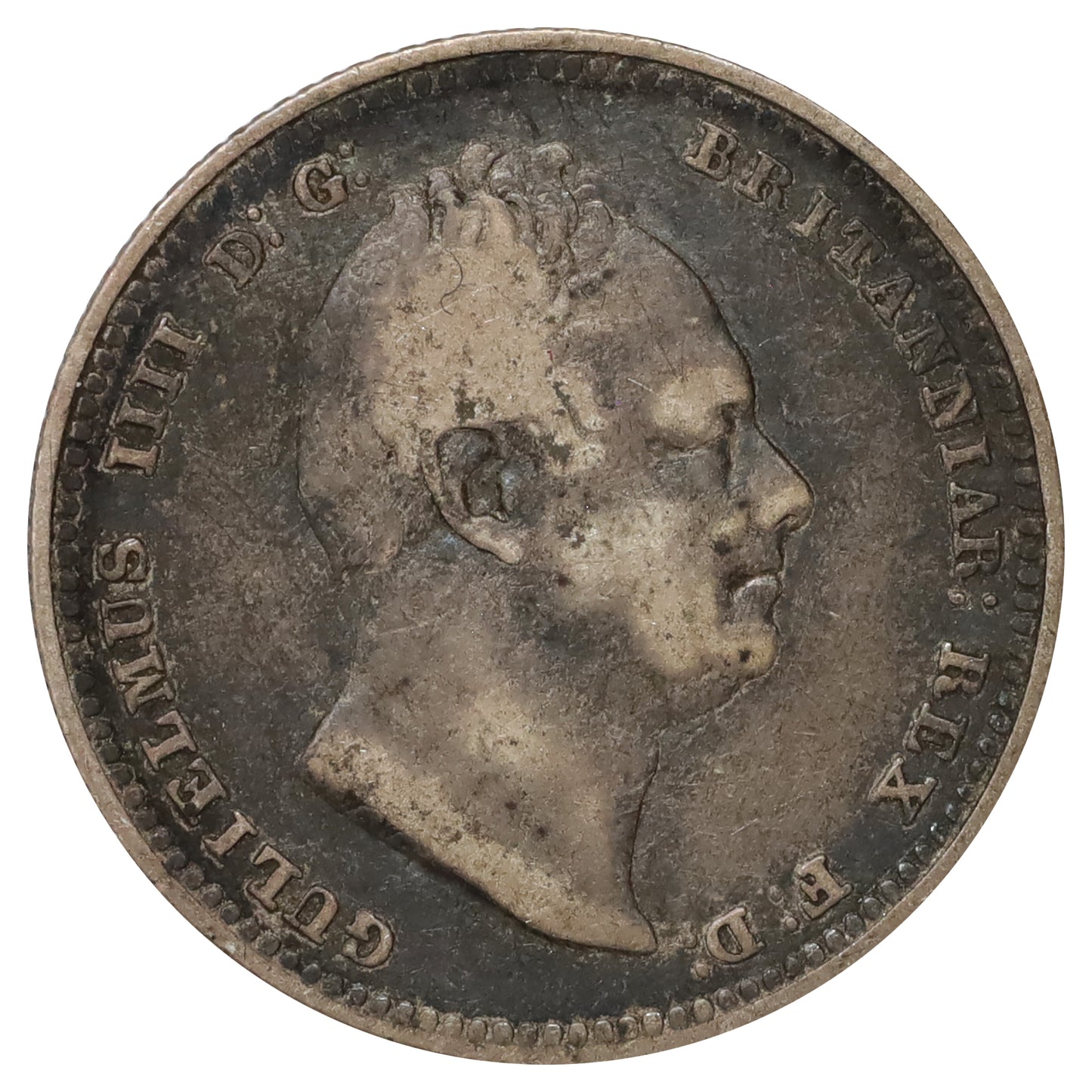
Great Britain 1834 William IV Shilling Fine (F12)
Great Britain 1834 William IV Shilling Fine (F12)
Regular price
$33.20
Regular price
$50.00
Sale price
$33.20
Unit price
per
We buy at $0.00
Shipping calculated at checkout.
◎ 1 Available
Couldn't load pickup availability

FREE SHIPPING OVER $500
Great Britain 1834 William IV Shilling Fine (F12)
William IV (1765-1837) was the younger brother of George IV. He was the last king of the Hanover line, and his reign is often folded into both the Georgian era and the Regency period, despite being neither a George nor a regent. Nicknamed the Sailor King, William had already had a successful career in North America and the Caribbean when he came to the throne at the age of 64. Despite his short reign, William was king through some good: child labour was restricted, male voting rights were expanded, and slavery was abolished throughout most of the British Empire. When William died in 1837, he had no surviving legitimate heir. The throne passed to his niece, Victoria.
Now you can bring home a piece of this fascinating period in British history. Perched between the Georgian and Victorian periods, William represents a time of change and evolution for the British Empire.
William IV (1765-1837) was the younger brother of George IV. He was the last king of the Hanover line, and his reign is often folded into both the Georgian era and the Regency period, despite being neither a George nor a regent. Nicknamed the Sailor King, William had already had a successful career in North America and the Caribbean when he came to the throne at the age of 64. Despite his short reign, William was king through some good: child labour was restricted, male voting rights were expanded, and slavery was abolished throughout most of the British Empire. When William died in 1837, he had no surviving legitimate heir. The throne passed to his niece, Victoria.
Now you can bring home a piece of this fascinating period in British history. Perched between the Georgian and Victorian periods, William represents a time of change and evolution for the British Empire.