


Colonial Acres Coins
SKU: SKU:xDOD-M135
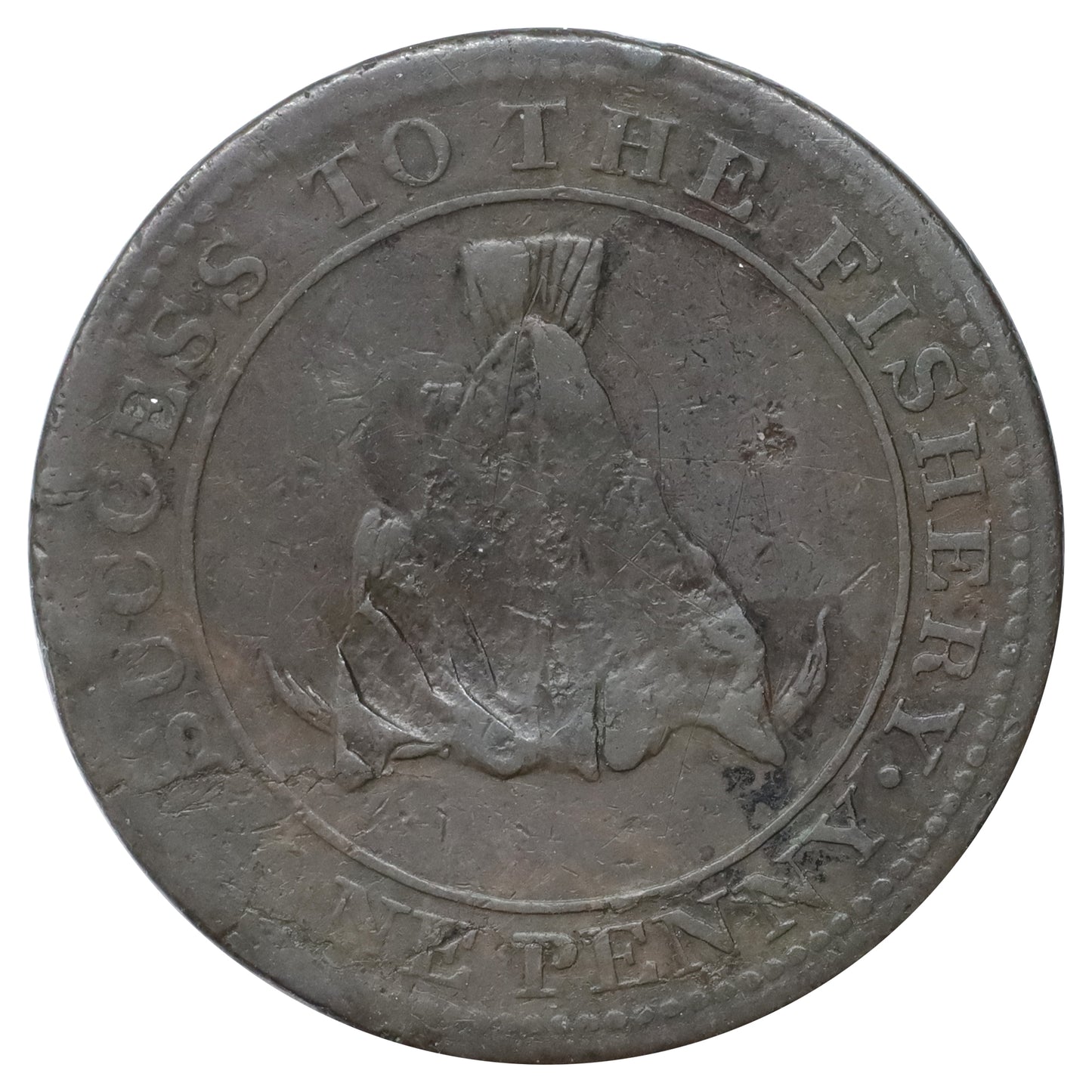
LC-1 1815 Lower Canada Magdalen Island Penny Token Very Fine (VF20) Impaired
LC-1 1815 Lower Canada Magdalen Island Penny Token Very Fine (VF20) Impaired
Regular price
$237.45
Regular price
$450.00
Sale price
$237.45
Unit price
per
We buy at $0.00
Shipping calculated at checkout.
◎ 1 Available
Couldn't load pickup availability

FREE SHIPPING OVER $500
LC-1 1815 Lower Canada Magdalen Island Penny Token Very Fine (VF20) Impaired
An archipelago in the Gulf of St. Lawrence, the Magdalen Islands were gifted to Sir Isaac Coffin, Admiral of the British Navy, in 1815 as a reward for his actions in the American War of Independence. Coffin promptly visited the islands, set up a feudal barony that would funnel rent from the island's inhabitants directly to his family, and abandoned them forever. Unsurprisingly, people did not appreciate paying rent to a family of landlords who had literally never seen their islands, and, after a long history of bad relations, the Canadian government bought the land from Coffin's descendants in 1895 and sold it back to the people who actually lived there.
Coins like this one circulated in Coffin's barony and spread around Lower Canada and the Maritimes. While not considered rare, finding one in relatively good condition is exceedingly so.
An archipelago in the Gulf of St. Lawrence, the Magdalen Islands were gifted to Sir Isaac Coffin, Admiral of the British Navy, in 1815 as a reward for his actions in the American War of Independence. Coffin promptly visited the islands, set up a feudal barony that would funnel rent from the island's inhabitants directly to his family, and abandoned them forever. Unsurprisingly, people did not appreciate paying rent to a family of landlords who had literally never seen their islands, and, after a long history of bad relations, the Canadian government bought the land from Coffin's descendants in 1895 and sold it back to the people who actually lived there.
Coins like this one circulated in Coffin's barony and spread around Lower Canada and the Maritimes. While not considered rare, finding one in relatively good condition is exceedingly so.