


Colonial Acres Coins
SKU: SKU:Dec.DOD-U2052
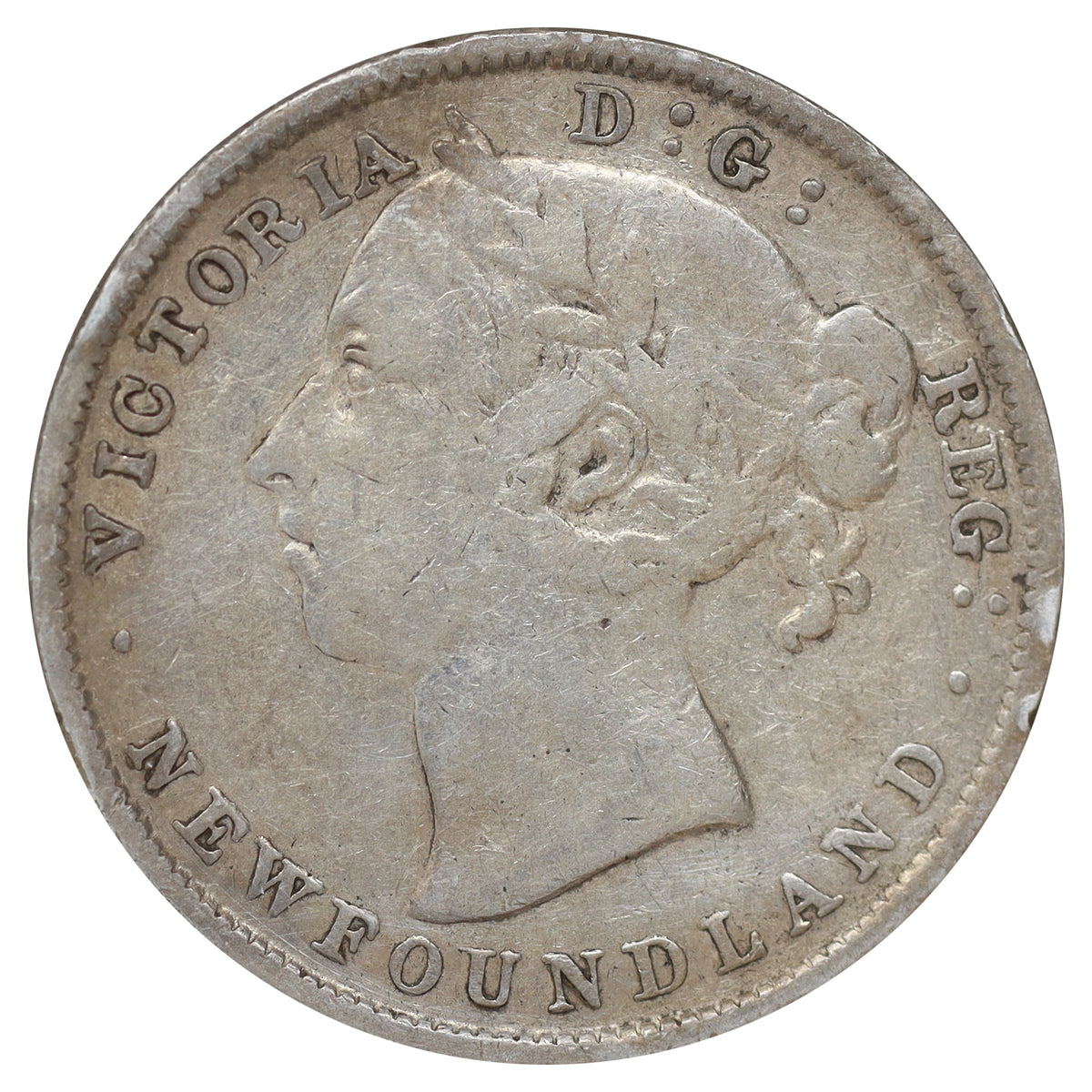
1894 Obv. 2 Newfoundland 20-cents Fine (F12) Scratched, marks, or impaired
1894 Obv. 2 Newfoundland 20-cents Fine (F12) Scratched, marks, or impaired
Regular price
$22.50
Regular price
$45.00
Sale price
$22.50
Unit price
per
We buy at $0.00
Shipping calculated at checkout.
◎ 1 Available
Couldn't load pickup availability

FREE SHIPPING OVER $500
1894 Obv. 2 Newfoundland 20-cents Fine (F12) Scratched, marks, or impaired
In 1858, the Province of Canada (now Ontario and Quebec) adopted its own decimal coinage system. The decision was made to follow the United States in the use of dollars and cents, rather than copy Britain with its use of pounds, shillings, and pence. In 1861, Nova Scotia and New Brunswick followed suit with 1-cent and (in Nova Scotia) half-cent coins featuring a distinctive crown and floral wreath made of English roses and Nova Scotia mayflowers. 5-cent, 10-cent, and 20-cent coins followed. Not to be left behind, Newfoundland began issuing its own coinage in 1865, followed by Prince Edward Island in 1871.
After Confederation, all provinces adopted a single, unified currency. Maritime coinage was retired -- except in Newfoundland, which would continue using its own currency until it joined Canada in 1949. Maritime coins continue to be unique and sought-after collector's pieces.