

Colonial Acres Coins
SKU: SKU:Aug.Week5.P1-KB2486
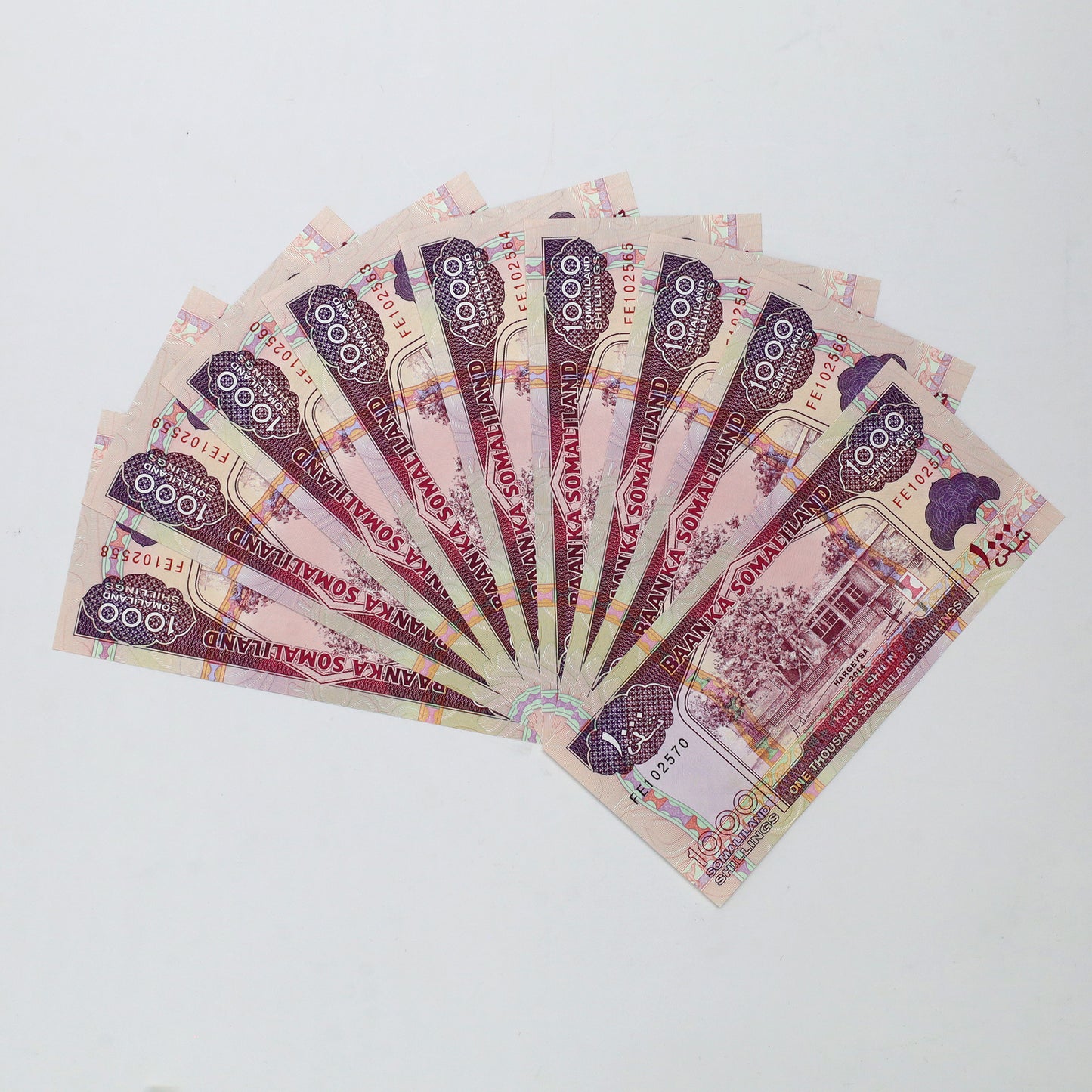
Lot of 9x Somaliland 2011-2016 1000 Shillings Banknotes, 9pcs
Lot of 9x Somaliland 2011-2016 1000 Shillings Banknotes, 9pcs
Regular price
$9.95
Regular price
Sale price
$9.95
Unit price
per
We buy at $0.00
Shipping calculated at checkout.
◎ Not Available
Couldn't load pickup availability

FREE SHIPPING OVER $500
Lot of 9x Somaliland 2011-2016 1000 Shillings Banknotes, 9pcs
Tucked into the Horn of Africa, Somaliland is a partially recognized state between Djibouti, Ethiopia, and Somalia. To the ancient world, it was probably known as the Land of Punt, and the people there traded gold, ivory, livestock, and other luxury goods with Egypt, Greece, Babylon, India, and even China. Throughout the Roman period, Somali merchants were famous for their spices -- chief among them cinnamon -- which they imported from India, Sri Lanka, and the Moluccas, and were instrumental in establishing the profitable spice trade. Adopting Islam in the High Middle Ages, various sultanates dominated the area until, of course, the British arrived in 1825. The British wanted access to the Suez Canal and, therefore, to India, and so they established the colony of British Somaliland. Somalis, unsurprisingly, were not pleased. What followed was a long campaign of imperial resistance led chiefly by the Dervish State, and it culminated in the eventual withdrawal of the British in 1960. Today, Somaliland is only recognized by one country: Israel. To the rest of the world, it remains part of Somalia.
This 1000 shilling note features the main headquarters of the Bank of Somaliland on the obverse, and a dockside in Berbera on the reverse.
Tucked into the Horn of Africa, Somaliland is a partially recognized state between Djibouti, Ethiopia, and Somalia. To the ancient world, it was probably known as the Land of Punt, and the people there traded gold, ivory, livestock, and other luxury goods with Egypt, Greece, Babylon, India, and even China. Throughout the Roman period, Somali merchants were famous for their spices -- chief among them cinnamon -- which they imported from India, Sri Lanka, and the Moluccas, and were instrumental in establishing the profitable spice trade. Adopting Islam in the High Middle Ages, various sultanates dominated the area until, of course, the British arrived in 1825. The British wanted access to the Suez Canal and, therefore, to India, and so they established the colony of British Somaliland. Somalis, unsurprisingly, were not pleased. What followed was a long campaign of imperial resistance led chiefly by the Dervish State, and it culminated in the eventual withdrawal of the British in 1960. Today, Somaliland is only recognized by one country: Israel. To the rest of the world, it remains part of Somalia.
This 1000 shilling note features the main headquarters of the Bank of Somaliland on the obverse, and a dockside in Berbera on the reverse.