


Colonial Acres Coins
SKU: SKU:WC-0079
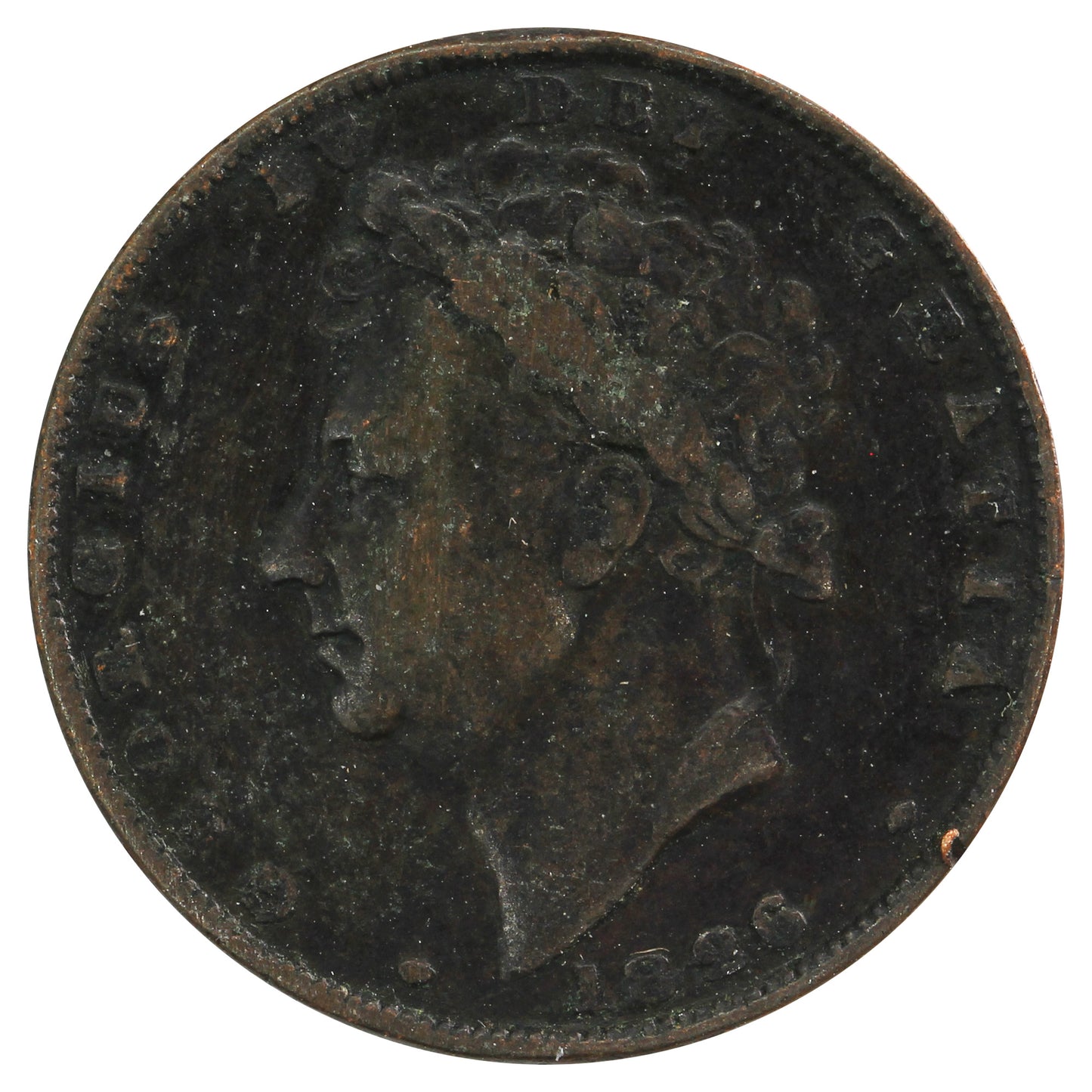
Great Britain 1826 Farthing Very Fine (VF20)
Great Britain 1826 Farthing Very Fine (VF20)
Regular price
$13.50
Regular price
$18.00
Sale price
$13.50
Unit price
per
We buy at $0.00
Shipping calculated at checkout.
◎ Not Available
Couldn't load pickup availability

FREE SHIPPING OVER $500
Great Britain 1826 Farthing Very Fine (VF-20)
George IV was King of the United Kingdom from 1820 to 1830 and had previously served as Prince Regent during the illness of his father, George III. Renowned for his lavish lifestyle, patronage of the arts, and extravagant building projects, George played a major role in shaping the culture and fashion of the Regency era. However, his personal life was often overshadowed by scandal, debt, and public controversy, which damaged his popularity despite the grandeur of his court.
One of the greatest sources of controversy was his unhappy marriage to Caroline of Brunswick. The couple married in 1795, largely for political and financial reasons, but they disliked each other almost immediately. After the birth of their only child, Princess Charlotte of Wales, in 1796, they effectively separated and lived apart for most of their lives. George repeatedly sought to end the marriage and, upon becoming king, attempted to prevent Caroline from being crowned queen. In 1820 he supported the controversial Pains and Penalties Bill, which sought to strip her of her title and dissolve the marriage, but widespread public sympathy for Caroline forced the government to abandon the measure.
George's relationship with his daughter Charlotte was also complicated. Although he loved her and recognized her importance as heir to the throne, he often clashed with her over her personal freedom and choice of husband. Charlotte became immensely popular with the British public, who viewed her as a hopeful contrast to her parents' turbulent marriage. In 1816 she married Prince Leopold of Saxe-Coburg-Saalfeld, and her future accession seemed assured. Tragically, however, Charlotte died in childbirth in 1817 at the age of twenty-one, along with her stillborn son. Her death plunged Britain into mourning and created a succession crisis that ultimately led to the accession of her cousin, Queen Victoria, in 1837. The loss of Charlotte was one of the most devastating events of George IV's life and had lasting consequences for the future of the British monarchy.
Obverse: Laureate portrait of George IV facing left, with the legend around, and the date below.
Reverse: Seated figure of Britannia facing right, holding a trident in her left hand, an olive branch in her right hand, a shield with a Union flag resting on her right side, with the legend around and the national flower emblems below.
Specifications:
Monarch: George IV (1820-1830)
Engraver: William Wyon
Composition: Copper
Weight: 4.72 g
Diameter: 22 mm
Edge: Plain
Die Axis: ↑↑
Mint: The Royal Mint, London, United Kingdom
Mintage: 6,666,200
George IV was King of the United Kingdom from 1820 to 1830 and had previously served as Prince Regent during the illness of his father, George III. Renowned for his lavish lifestyle, patronage of the arts, and extravagant building projects, George played a major role in shaping the culture and fashion of the Regency era. However, his personal life was often overshadowed by scandal, debt, and public controversy, which damaged his popularity despite the grandeur of his court.
One of the greatest sources of controversy was his unhappy marriage to Caroline of Brunswick. The couple married in 1795, largely for political and financial reasons, but they disliked each other almost immediately. After the birth of their only child, Princess Charlotte of Wales, in 1796, they effectively separated and lived apart for most of their lives. George repeatedly sought to end the marriage and, upon becoming king, attempted to prevent Caroline from being crowned queen. In 1820 he supported the controversial Pains and Penalties Bill, which sought to strip her of her title and dissolve the marriage, but widespread public sympathy for Caroline forced the government to abandon the measure.
George's relationship with his daughter Charlotte was also complicated. Although he loved her and recognized her importance as heir to the throne, he often clashed with her over her personal freedom and choice of husband. Charlotte became immensely popular with the British public, who viewed her as a hopeful contrast to her parents' turbulent marriage. In 1816 she married Prince Leopold of Saxe-Coburg-Saalfeld, and her future accession seemed assured. Tragically, however, Charlotte died in childbirth in 1817 at the age of twenty-one, along with her stillborn son. Her death plunged Britain into mourning and created a succession crisis that ultimately led to the accession of her cousin, Queen Victoria, in 1837. The loss of Charlotte was one of the most devastating events of George IV's life and had lasting consequences for the future of the British monarchy.
Obverse: Laureate portrait of George IV facing left, with the legend around, and the date below.
Reverse: Seated figure of Britannia facing right, holding a trident in her left hand, an olive branch in her right hand, a shield with a Union flag resting on her right side, with the legend around and the national flower emblems below.
Specifications:
Monarch: George IV (1820-1830)
Engraver: William Wyon
Composition: Copper
Weight: 4.72 g
Diameter: 22 mm
Edge: Plain
Die Axis: ↑↑
Mint: The Royal Mint, London, United Kingdom
Mintage: 6,666,200