


Colonial Acres Coins
SKU: SKU:Aug.Week2.P3-KB1632
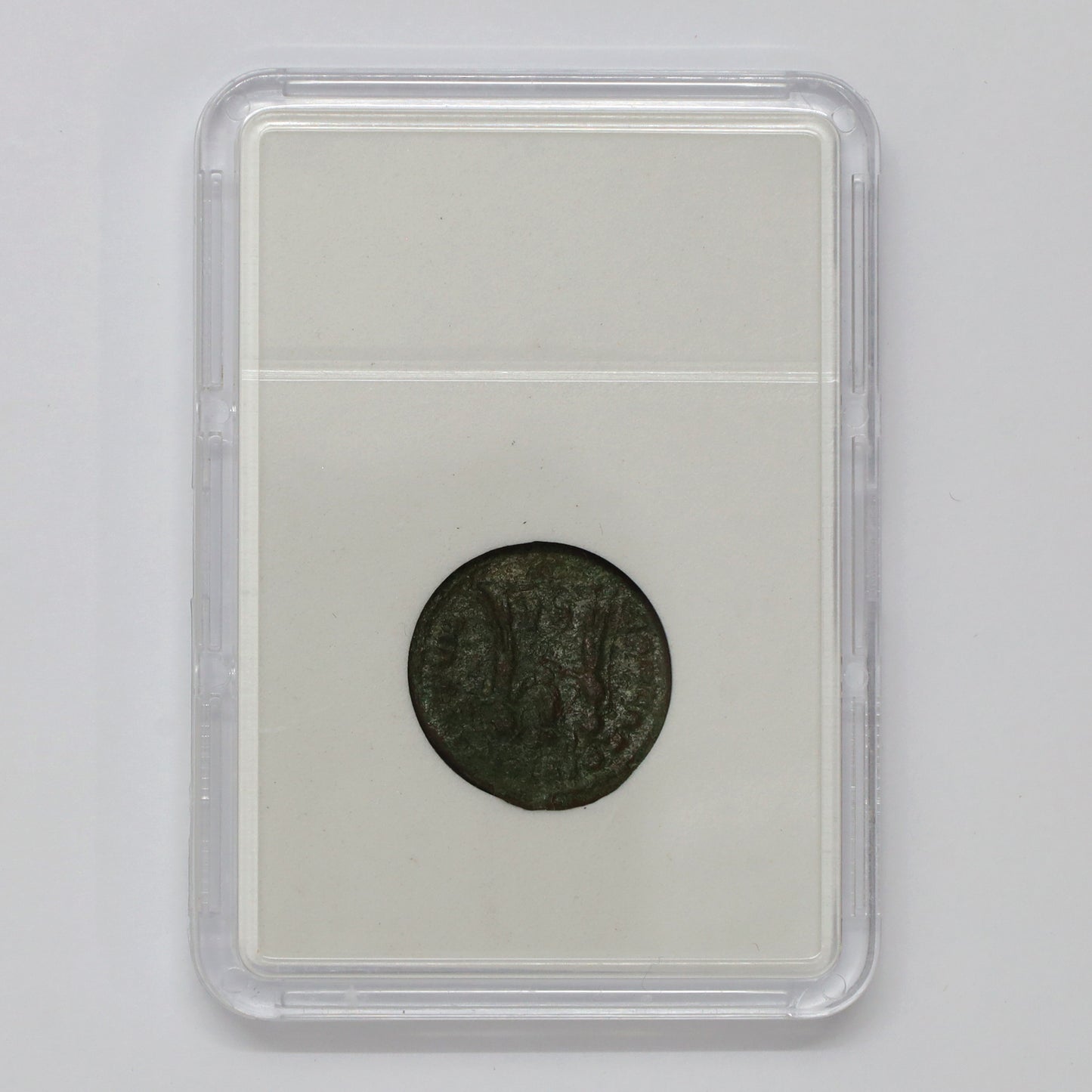
Ancient Rome 305-311 AD Galerius Bronze Coin
Ancient Rome 305-311 AD Galerius Bronze Coin
Regular price
$28.45
Regular price
Sale price
$28.45
Unit price
per
We buy at $0.00
Shipping calculated at checkout.
◎ 1 Available
Couldn't load pickup availability

FREE SHIPPING OVER $500
Ancient Rome 305-311 AD Galerius Bronze Coin
When Diocletian took the purple in 284, he was at the tail end of a period that historians now call the Crisis of the Third Century. He recognized that the empire's core problem was that it had grown too large and its problems too complex for one-man rule, and made the hard choice to give up power in exchange for stability. This was the birth of the Tetrarchy (literally "rule of four"), which saw Diocletian split the empire into quarters and assign himself three junior co-emperors. With a smaller area and more localized problems to focus on, each co-emperor could rule and defend more effectively and, therefore, contribute to a stronger and more stable whole.
The two senior emperors, called augusti, were Diocletian and his (probably) adopted son, Maximian. The two junior, called caesares, were their sons-in-law, Galerius and Constantius. The Tetrarchy actually worked fairly well for a while, bringing stability to a fractioning empire, but it all went sideways when the older generation retired.
It was because of succession. It was assumed that when Galerius and Constantius ascended, one of the two new vacancies for caesares would go to Maximian's son, Maxentius. The other would go to Constantius' son, Constantine. They did not. Instead both positions went to people associated with Galerius -- his friend, Severus, and his nephew, Maximinus. Constantine nearly revolted, but was appeased. Maxentius revolted for real -- and worse, he brought his dad with him. Maximian had commanded Rome's armies for decades; he had their loyalty, and as soon as Severus made a move on him, the soldiers changed sides and Severus was put to death.
It dawned on Galerius that of all the players on the field, he was, in fact, the least popular. His army was deserting him. Maximian had pulled Constantine onto the field now. The Tetrarchy was in shambles, and Galerius was fading into the background.
Galerius kept to himself, letting the other heavy hitters duke it out while he focused on public works in the area he did control. He died in 311 from a truly horrific infection in the pelvic region that many historians today identify as Fournier gangrene.
The story of the Tetrarchy is one of promising political experimentation turned sour; of hope dashed by greed. Own a piece of it with this coin, featuring the bust of Galerius on the obverse. The reverse depicts Galerius receiving the goddess Victoria (Victory) standing atop a globe, handed to him by the king of the gods, Jupiter.
When Diocletian took the purple in 284, he was at the tail end of a period that historians now call the Crisis of the Third Century. He recognized that the empire's core problem was that it had grown too large and its problems too complex for one-man rule, and made the hard choice to give up power in exchange for stability. This was the birth of the Tetrarchy (literally "rule of four"), which saw Diocletian split the empire into quarters and assign himself three junior co-emperors. With a smaller area and more localized problems to focus on, each co-emperor could rule and defend more effectively and, therefore, contribute to a stronger and more stable whole.
The two senior emperors, called augusti, were Diocletian and his (probably) adopted son, Maximian. The two junior, called caesares, were their sons-in-law, Galerius and Constantius. The Tetrarchy actually worked fairly well for a while, bringing stability to a fractioning empire, but it all went sideways when the older generation retired.
It was because of succession. It was assumed that when Galerius and Constantius ascended, one of the two new vacancies for caesares would go to Maximian's son, Maxentius. The other would go to Constantius' son, Constantine. They did not. Instead both positions went to people associated with Galerius -- his friend, Severus, and his nephew, Maximinus. Constantine nearly revolted, but was appeased. Maxentius revolted for real -- and worse, he brought his dad with him. Maximian had commanded Rome's armies for decades; he had their loyalty, and as soon as Severus made a move on him, the soldiers changed sides and Severus was put to death.
It dawned on Galerius that of all the players on the field, he was, in fact, the least popular. His army was deserting him. Maximian had pulled Constantine onto the field now. The Tetrarchy was in shambles, and Galerius was fading into the background.
Galerius kept to himself, letting the other heavy hitters duke it out while he focused on public works in the area he did control. He died in 311 from a truly horrific infection in the pelvic region that many historians today identify as Fournier gangrene.
The story of the Tetrarchy is one of promising political experimentation turned sour; of hope dashed by greed. Own a piece of it with this coin, featuring the bust of Galerius on the obverse. The reverse depicts Galerius receiving the goddess Victoria (Victory) standing atop a globe, handed to him by the king of the gods, Jupiter.