


Colonial Acres Coins
SKU: SKU:Aug.Week2.P3-KB1629
Ancient Rome 253-268 AD Gallienus Bronze Coin
Ancient Rome 253-268 AD Gallienus Bronze Coin
Regular price
$28.45
Regular price
Sale price
$28.45
Unit price
per
We buy at $0.00
Shipping calculated at checkout.
◎ 1 Available
Couldn't load pickup availability

FREE SHIPPING OVER $500
Ancient Rome 253-268 AD Gallienus Bronze Coin
The third century was a bad time for the Roman Empire -- so bad, historians literally refer to it as the "Crisis of the Third Century." Frontier security, plague, climate change, civil war, taxes; every problem that had tickled the empire for the past three hundred years was teetering on the edge of becoming a catastrophe. Perhaps the most pressing problem, however, was imperial succession. In just over fifty years, twenty-six men claimed the title of emperor. One of those men was Gallienus.
Gallienus was the son of Valerian, who had the rather crummy distinction of being the first Roman Emperor to have been taken prisoner in battle. He had lost badly to Rome's old rival, the Sasanian Empire, and now Gallienus was on his own, trying to hold together the fraying ends of a declining empire. His solo reign, which lasted about eight years, can be summed up as a game of Insurgency Whack-a-Mole: revolt breaks out, Gallienus responds, usurpers pop up, Gallienus responds, and so forth. The major one was led by a general named Postumus, who staged a dramatic coup that ended in the siege of Cologne, the declaration of an independent Gallic state, and the murder of Gallienus' son, Saloninus. Gallienus, naturally, wanted revenge -- but his resources were stretched too thin between all of the revolts and invasions that plagued Rome. He could do nothing meaningful, and so Gaul remained an independent empire (known now as the Gallic-Roman Empire) for the next fourteen years.
Gallienus limped along, doing his best to manage the absolute pandemonium around him, until one of his rivals finally struck him dead while he was leaving his tent. His successor, Claudius Gothicus, may or may not have been involved. Gallienus was then painted with the sort of slanderous brush that is typical of Roman emperors who lose territory: he was decadent, womanlike, a crossdresser. Julian's satirical work The Caesars describes him as "decked in gold and dainty as a maiden." This is, obviously, doubtful, if only because sashaying about in drag on the field of brutal, unending, back-to-back wars seems a bit burdensome. (Though, if he was: slay, queen.)
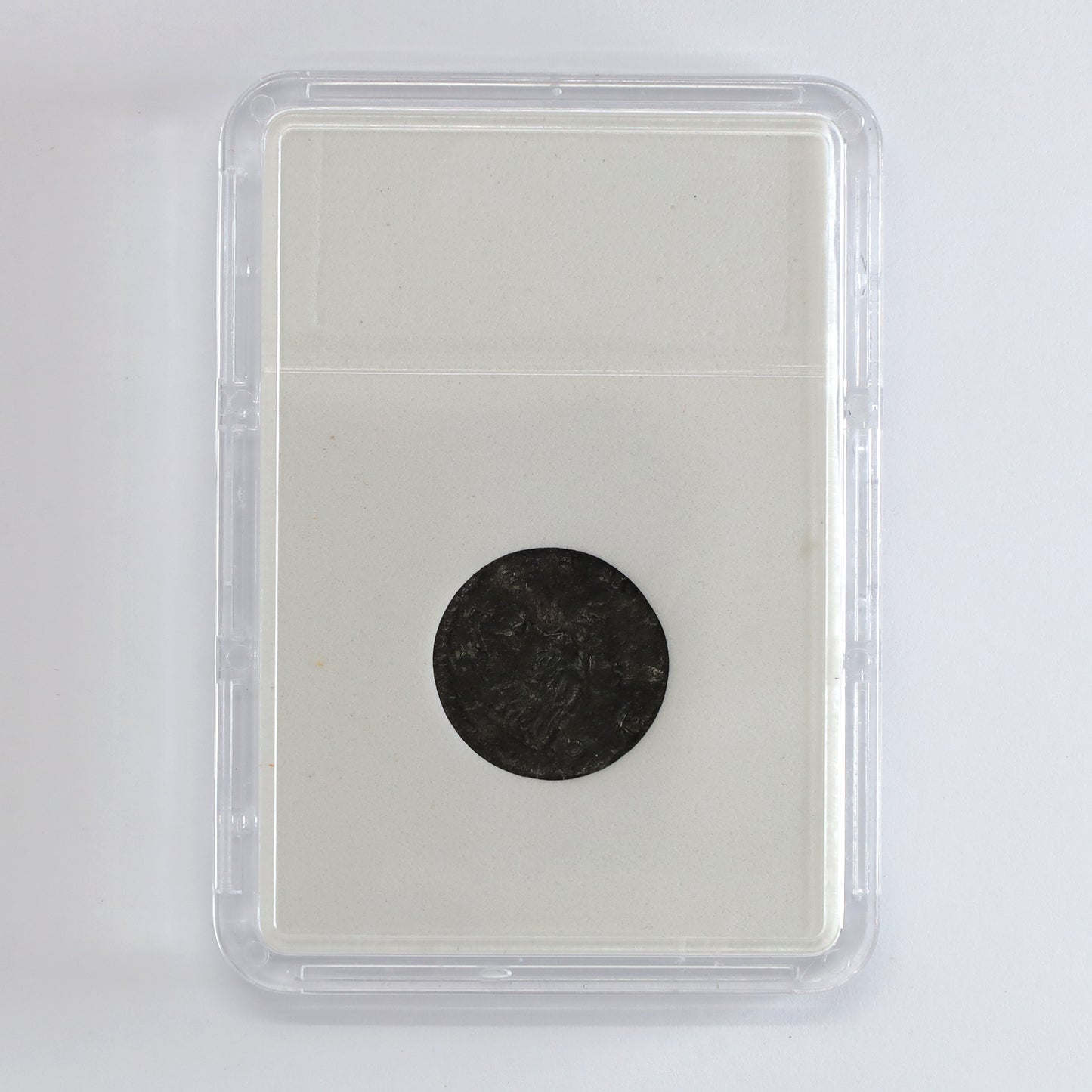
Now you can own a piece of this chaotic period in Roman history. This bronze coin features the bust of Gallienus on the obverse, radiate and cuirassed. The reverse shows Gallienus and his father, Valerian, performing a sacrifice at a flaming altar.
The third century was a bad time for the Roman Empire -- so bad, historians literally refer to it as the "Crisis of the Third Century." Frontier security, plague, climate change, civil war, taxes; every problem that had tickled the empire for the past three hundred years was teetering on the edge of becoming a catastrophe. Perhaps the most pressing problem, however, was imperial succession. In just over fifty years, twenty-six men claimed the title of emperor. One of those men was Gallienus.
Gallienus was the son of Valerian, who had the rather crummy distinction of being the first Roman Emperor to have been taken prisoner in battle. He had lost badly to Rome's old rival, the Sasanian Empire, and now Gallienus was on his own, trying to hold together the fraying ends of a declining empire. His solo reign, which lasted about eight years, can be summed up as a game of Insurgency Whack-a-Mole: revolt breaks out, Gallienus responds, usurpers pop up, Gallienus responds, and so forth. The major one was led by a general named Postumus, who staged a dramatic coup that ended in the siege of Cologne, the declaration of an independent Gallic state, and the murder of Gallienus' son, Saloninus. Gallienus, naturally, wanted revenge -- but his resources were stretched too thin between all of the revolts and invasions that plagued Rome. He could do nothing meaningful, and so Gaul remained an independent empire (known now as the Gallic-Roman Empire) for the next fourteen years.
Gallienus limped along, doing his best to manage the absolute pandemonium around him, until one of his rivals finally struck him dead while he was leaving his tent. His successor, Claudius Gothicus, may or may not have been involved. Gallienus was then painted with the sort of slanderous brush that is typical of Roman emperors who lose territory: he was decadent, womanlike, a crossdresser. Julian's satirical work The Caesars describes him as "decked in gold and dainty as a maiden." This is, obviously, doubtful, if only because sashaying about in drag on the field of brutal, unending, back-to-back wars seems a bit burdensome. (Though, if he was: slay, queen.)
Now you can own a piece of this chaotic period in Roman history. This bronze coin features the bust of Gallienus on the obverse, radiate and cuirassed. The reverse shows Gallienus and his father, Valerian, performing a sacrifice at a flaming altar.