


Colonial Acres Coins
SKU: SKU:xDOD-N213
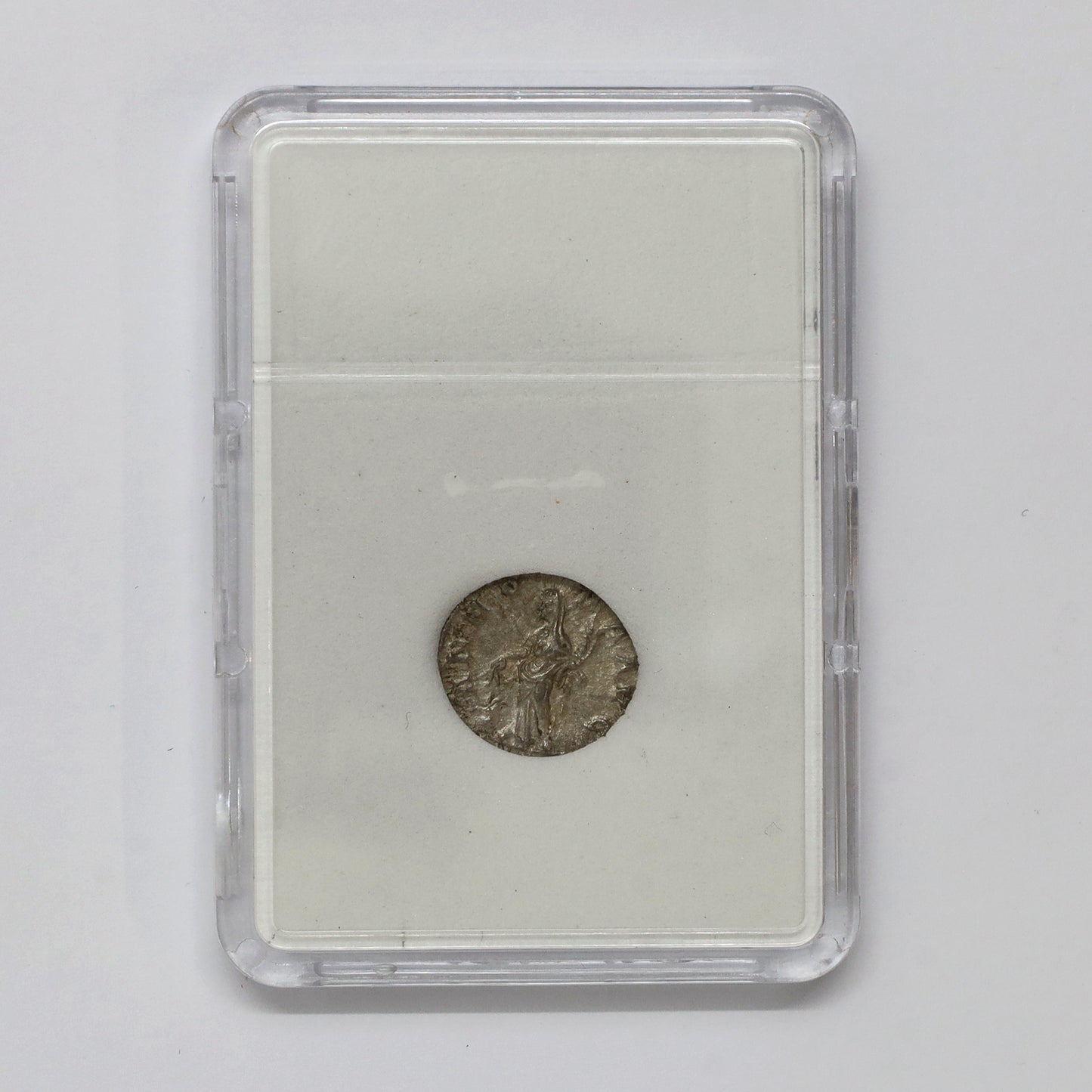
Ancient Rome 222-235 AD Severus Alexander Silver Denarius in Slab (DOD)
Ancient Rome 222-235 AD Severus Alexander Silver Denarius in Slab (DOD)
Regular price
$88.95
Regular price
$120.00
Sale price
$88.95
Unit price
per
We buy at $0.00
Shipping calculated at checkout.
◎ Not Available
Couldn't load pickup availability

FREE SHIPPING OVER $500
Ancient Rome 222-235 AD Severus Alexander Silver Denarius in Slab
Taking power at just 13 and dying at only 26, young Severus Alexander's reign is most important for what it represents: the end of a strong and cohesive Roman Empire. His rule was predictably weak (being only a child for most of it), and trouble brewed on the frontiers in both the east, with the rising Sassanid Empire, and in the north, with the Germanic tribes who would ultimately be Rome's undoing. When he tried to negotiate peace with the latter (on the advice of his mom), the army turned on him, and he was assassinated.
Severus Alexander's assassination ended the Severan dynasty and launched a period now referred to as the Crisis of the Third Century. Every looming political, economic and security issue that had brewed for the last several hundred years came home to roost. Money was a problem, as the size of the empire made it simply too expensive to run. Frontiers were a problem, as the Sassanids and Germans blocked expansion and threatened border provinces. Imperial succession was a problem, with twenty-six emperors claiming the title in just over fifty years. Plague was a problem. Climate change was a problem. Civil war was a problem. Taxes were a problem. And just to top it off, the esoteric old religion began to break down, and Christianity arrived to take its place. It was a period of change, uncertainty and decline, and, though it would have its high points, the Roman Empire never really recovered.
Taking power at just 13 and dying at only 26, young Severus Alexander's reign is most important for what it represents: the end of a strong and cohesive Roman Empire. His rule was predictably weak (being only a child for most of it), and trouble brewed on the frontiers in both the east, with the rising Sassanid Empire, and in the north, with the Germanic tribes who would ultimately be Rome's undoing. When he tried to negotiate peace with the latter (on the advice of his mom), the army turned on him, and he was assassinated.
Severus Alexander's assassination ended the Severan dynasty and launched a period now referred to as the Crisis of the Third Century. Every looming political, economic and security issue that had brewed for the last several hundred years came home to roost. Money was a problem, as the size of the empire made it simply too expensive to run. Frontiers were a problem, as the Sassanids and Germans blocked expansion and threatened border provinces. Imperial succession was a problem, with twenty-six emperors claiming the title in just over fifty years. Plague was a problem. Climate change was a problem. Civil war was a problem. Taxes were a problem. And just to top it off, the esoteric old religion began to break down, and Christianity arrived to take its place. It was a period of change, uncertainty and decline, and, though it would have its high points, the Roman Empire never really recovered.