


Colonial Acres Coins
SKU: SKU:AC-0464
Ancient Persia Achaemenid Kingdom 485-420 BC Darios I/Xerxes II Silver Siglos Fine (F12)
Ancient Persia Achaemenid Kingdom 485-420 BC Darios I/Xerxes II Silver Siglos Fine (F12)
Regular price
$225.00
Regular price
$250.00
Sale price
$225.00
Unit price
per
We buy at $0.00
Shipping calculated at checkout.
◎ 1 Available
Couldn't load pickup availability

FREE SHIPPING OVER $500
Ancient Persia Achaemenid Kingdom 485-420 BC Counter Marked, Sardis Mint, Darios I - Xerxes II Silver Siglos Fine (F12)
Between 485 and 420 BC, the Achaemenid Empire was one of the largest and most powerful states in the ancient world, ruling a vast territory stretching from the Indus Valley to Egypt and into parts of Thrace. This period begins with the reign of Xerxes I (r. 486–465 BC), who led the famous second invasion of Greece during the Greco-Persian Wars, including battles such as Thermopylae and Salamis. Despite early successes, the Persian campaign ultimately failed, marking the end of large-scale Persian attempts to conquer mainland Greece.
After Xerxes’ assassination, the empire entered a phase of internal consolidation under rulers such as Artaxerxes I (r. 465–424 BC), who faced rebellions in Egypt and satrapal unrest but maintained overall imperial stability. The administration relied on a system of satrapies (provinces), efficient taxation, and a strong royal road network that facilitated communication across vast distances. Although military setbacks in the Aegean reduced Persian influence in Greece, the empire remained politically stable and economically rich, continuing to dominate the Near East until later internal struggles in the 4th century BC.
Obverse: A Persian king or hero kneeling facing right with a quiver, holding a spear in the right hand and a bow in the left.
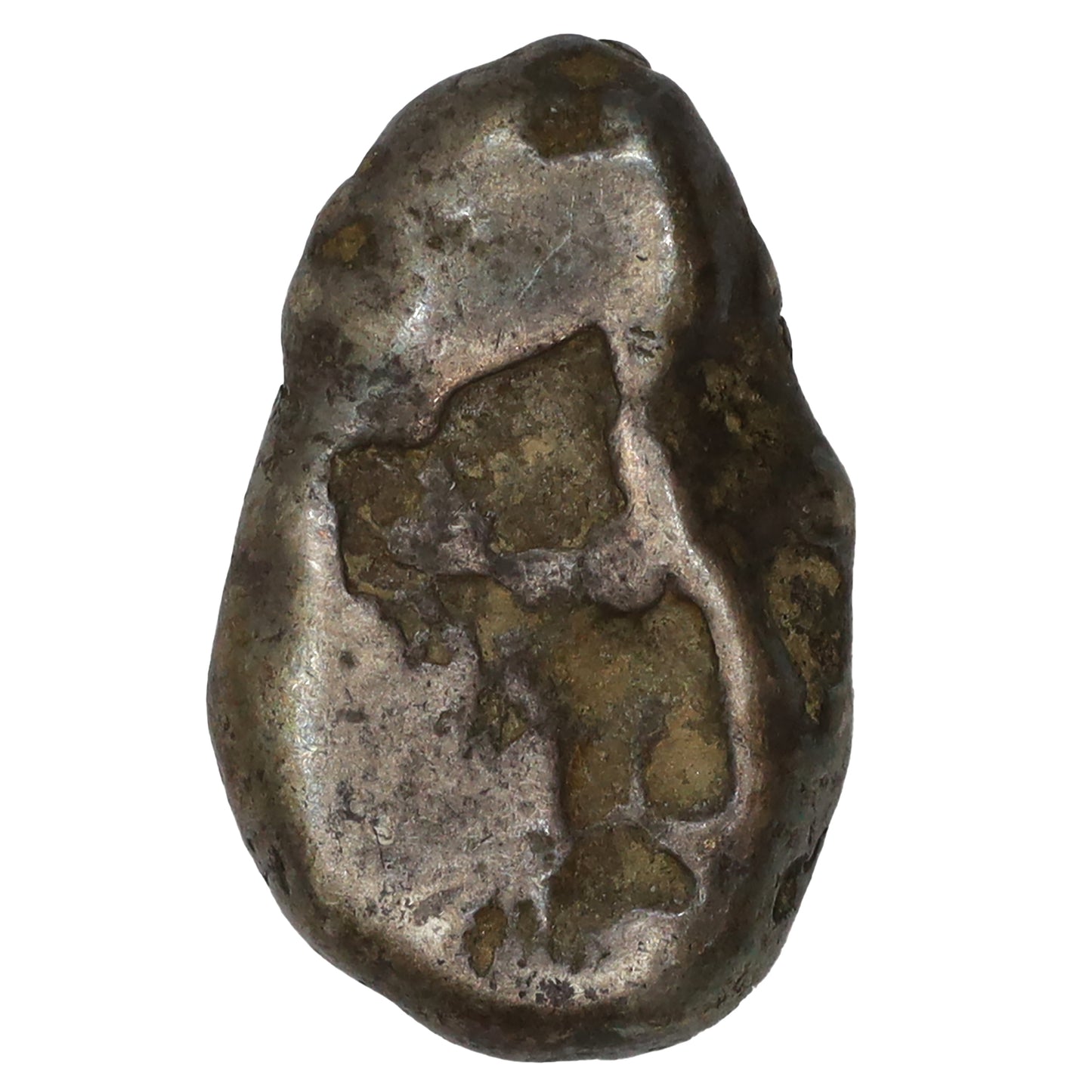
Reverse: An incuse punch with counter marks.
Specifications:
Issuer: Achaemenid Empire (559 BC - 330 BC)
King: Darius I the Great (522 BC - 486 BC), Xerxes I (486 BC - 465 BC), Artaxerxes I (465 BC - 424 BC), Xerxes II (424 BC)
Composition: Silver
Weight: Approx. 5.5 g
Diameter: Approx. 15 mm
Mint: Sardis, Lydia (modern-day Sart, Turkey)
Between 485 and 420 BC, the Achaemenid Empire was one of the largest and most powerful states in the ancient world, ruling a vast territory stretching from the Indus Valley to Egypt and into parts of Thrace. This period begins with the reign of Xerxes I (r. 486–465 BC), who led the famous second invasion of Greece during the Greco-Persian Wars, including battles such as Thermopylae and Salamis. Despite early successes, the Persian campaign ultimately failed, marking the end of large-scale Persian attempts to conquer mainland Greece.
After Xerxes’ assassination, the empire entered a phase of internal consolidation under rulers such as Artaxerxes I (r. 465–424 BC), who faced rebellions in Egypt and satrapal unrest but maintained overall imperial stability. The administration relied on a system of satrapies (provinces), efficient taxation, and a strong royal road network that facilitated communication across vast distances. Although military setbacks in the Aegean reduced Persian influence in Greece, the empire remained politically stable and economically rich, continuing to dominate the Near East until later internal struggles in the 4th century BC.
Obverse: A Persian king or hero kneeling facing right with a quiver, holding a spear in the right hand and a bow in the left.
Reverse: An incuse punch with counter marks.
Specifications:
Issuer: Achaemenid Empire (559 BC - 330 BC)
King: Darius I the Great (522 BC - 486 BC), Xerxes I (486 BC - 465 BC), Artaxerxes I (465 BC - 424 BC), Xerxes II (424 BC)
Composition: Silver
Weight: Approx. 5.5 g
Diameter: Approx. 15 mm
Mint: Sardis, Lydia (modern-day Sart, Turkey)