


Colonial Acres Coins
SKU: SKU:AC-0461
Ancient Greece 173-167 BC Alabanda for Alexander III Tetradrachm Extra Fine (EF40)
Ancient Greece 173-167 BC Alabanda for Alexander III Tetradrachm Extra Fine (EF40)
Regular price
$1,305.00
Regular price
$1,450.00
Sale price
$1,305.00
Unit price
per
We buy at $0.00
Shipping calculated at checkout.
◎ 1 Available
Couldn't load pickup availability

FREE SHIPPING OVER $500
Ancient Greece 173-167 BC Alabanda in the name of Alexander III Tetradrachm Extra Fine (EF40)
The tetradrachms of Alabanda struck in the name of Alexander III the Great around 173–167 BC are classic examples of long-lived “Alexander type” coinage. These issues were produced generations after his death but still carried his name and imagery due to their wide recognition and trust in trade. By this period, Alabanda, located in Caria in Asia Minor (modern-day Turkey), was operating within the sphere of larger Hellenistic powers while maintaining a degree of local autonomy.
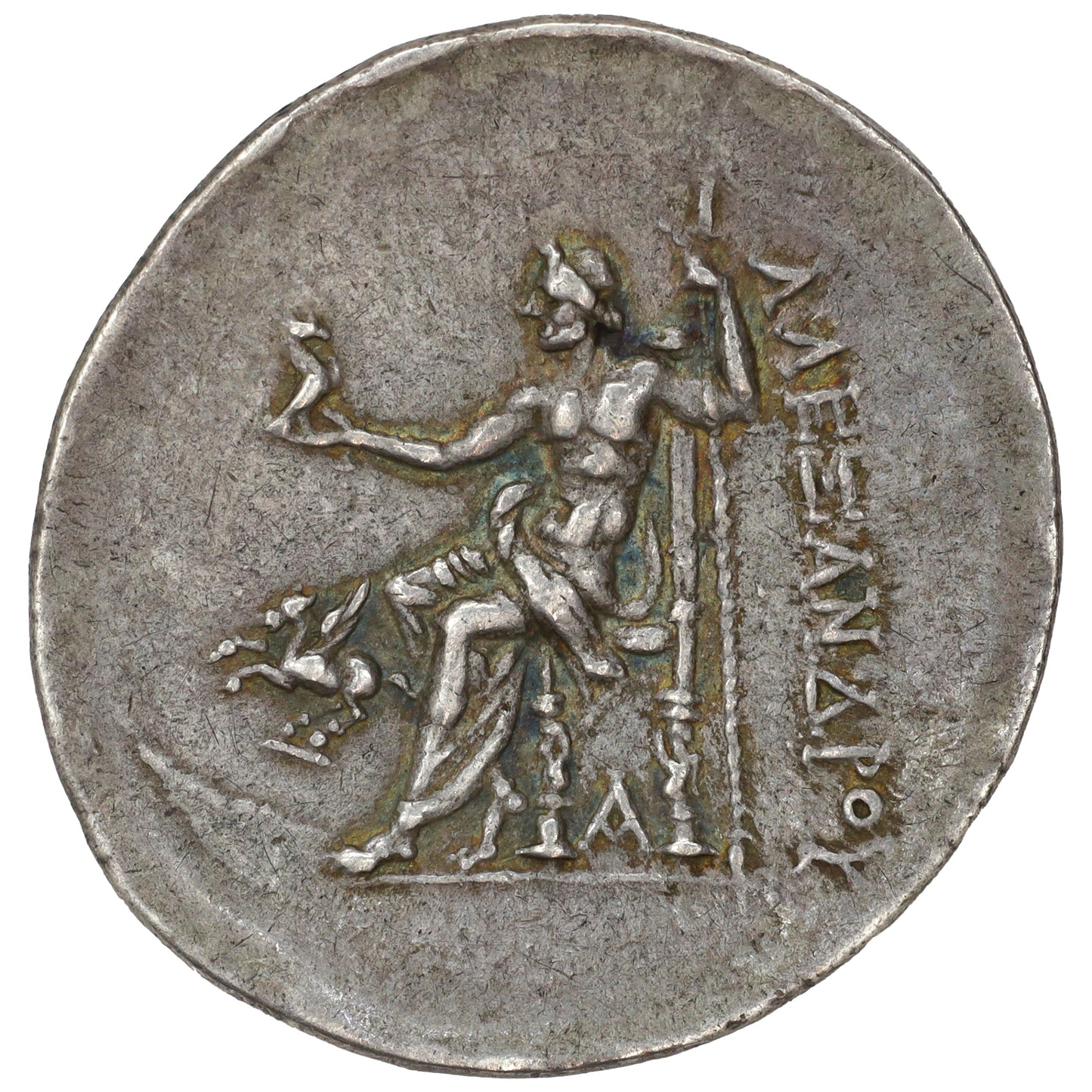
These silver tetradrachms typically feature the familiar obverse of Heracles wearing a lion-skin headdress, while the reverse shows Zeus seated on a throne holding an eagle and scepter, accompanied by the inscription that translates to “of Alexander”. What distinguishes issues from Alabanda are their mint marks and monograms, which can include local symbols or magistrate signatures that help attribute the coin to the city.
Historically, this period coincides with the aftermath of the Roman–Seleucid War and the growing dominance of the Roman Republic in Asia Minor. Cities like Alabanda continued striking Alexander-type coinage because it remained a widely accepted international currency standard.
Obverse: Head of Heracles in a lion skin headdress facing right.
Reverse: Zeus seated facing left on a backless throne, holding an eagle in his right hand and a sceptre in his left, with a Pegasus flying to the left in the background, and inscription to the right.
Specifications:
Issuer: Alabanda (Caria)
Stated Authority: Alexander III the Great (336 BC - 323 BC)
Composition: Silver
Weight: Approx. 17 g
Diameter: Approx. 33 mm
Mint: Alabanda, Caria (modern day Doganyurt, Turkey)
The tetradrachms of Alabanda struck in the name of Alexander III the Great around 173–167 BC are classic examples of long-lived “Alexander type” coinage. These issues were produced generations after his death but still carried his name and imagery due to their wide recognition and trust in trade. By this period, Alabanda, located in Caria in Asia Minor (modern-day Turkey), was operating within the sphere of larger Hellenistic powers while maintaining a degree of local autonomy.
These silver tetradrachms typically feature the familiar obverse of Heracles wearing a lion-skin headdress, while the reverse shows Zeus seated on a throne holding an eagle and scepter, accompanied by the inscription that translates to “of Alexander”. What distinguishes issues from Alabanda are their mint marks and monograms, which can include local symbols or magistrate signatures that help attribute the coin to the city.
Historically, this period coincides with the aftermath of the Roman–Seleucid War and the growing dominance of the Roman Republic in Asia Minor. Cities like Alabanda continued striking Alexander-type coinage because it remained a widely accepted international currency standard.
Obverse: Head of Heracles in a lion skin headdress facing right.
Reverse: Zeus seated facing left on a backless throne, holding an eagle in his right hand and a sceptre in his left, with a Pegasus flying to the left in the background, and inscription to the right.
Specifications:
Issuer: Alabanda (Caria)
Stated Authority: Alexander III the Great (336 BC - 323 BC)
Composition: Silver
Weight: Approx. 17 g
Diameter: Approx. 33 mm
Mint: Alabanda, Caria (modern day Doganyurt, Turkey)