


Colonial Acres Coins
SKU: SKU:Jun.DOD-N104
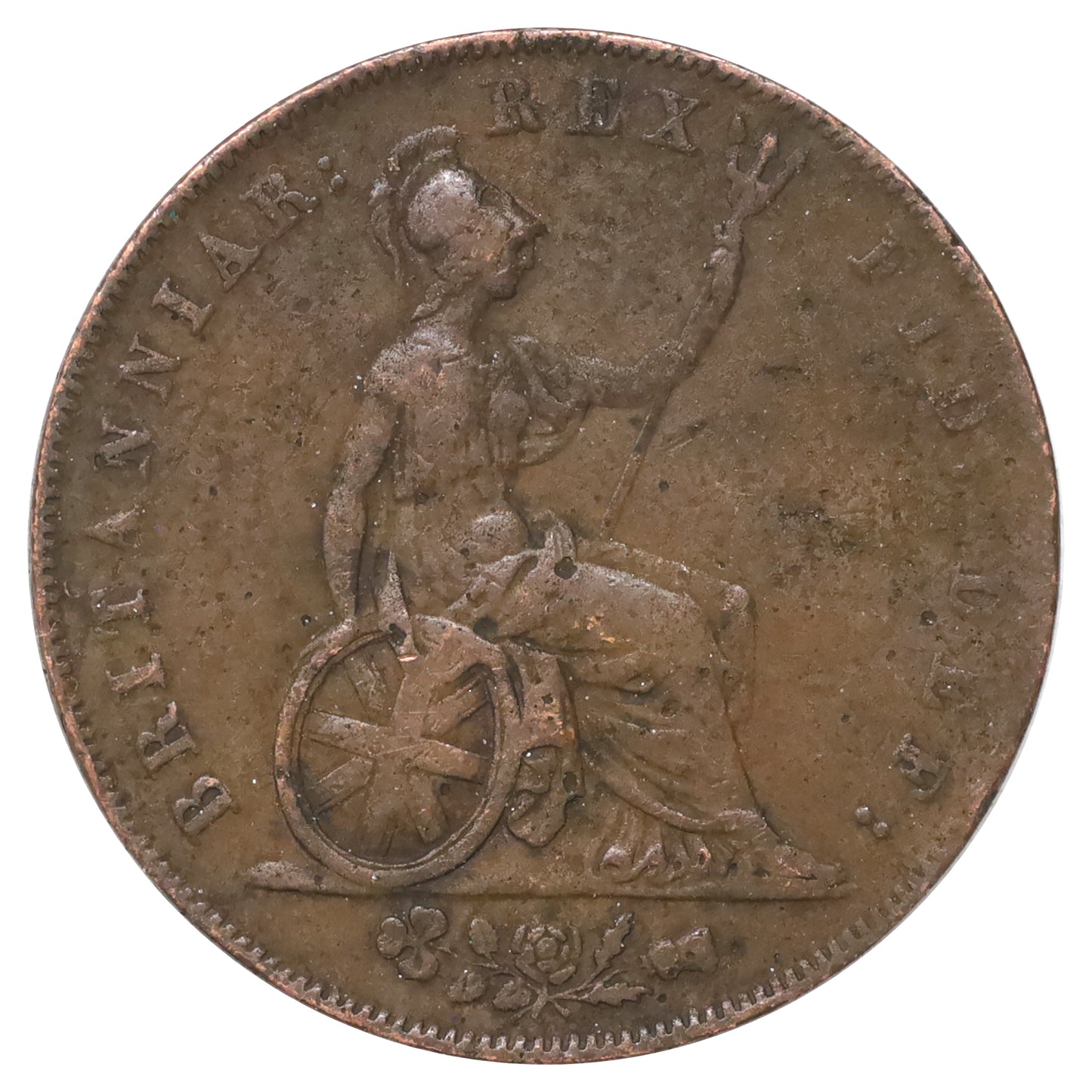
Great Britain 1826 George IV Halfpenny Very Fine (VF20) Impaired
Great Britain 1826 George IV Halfpenny Very Fine (VF20) Impaired
Regular price
$11.95
Regular price
$20.00
Sale price
$11.95
Unit price
per
We buy at $0.00
Shipping calculated at checkout.
◎ 1 Available
Couldn't load pickup availability

FREE SHIPPING OVER $500
Great Britain 1826 George IV Halfpenny Very Fine (VF20) Impaired
Around 1811, the mental illness that had plagued George III for his entire life became debilitating. He was isolated at Windsor for treatment, and his son, also George, took over the running of the empire as regent. This period, connecting George III's final bout with illness, his eventual death, and his son's entire ten-year reign, is generally referred to as the Regency. Remembered for lavish balls, afternoon teas, strolls through cultivated gardens, and the high-waisted empire dresses worn by the Lizzie Bennets and Kate Bridgertons of literature, the Regency was a period of elegance and refinement. It was also, for many, a period of intense suffering. Britain was industrializing, with populations flooding into cities and cramming into filthy slums. Colonial exploitation was also in full swing, and the British Empire was only growing in influence.
George IV was king in everything but name from about 1811 onward. He was a patron of the arts, extensively remodelling Buckingham Palace and popularizing the fashions that so defined the era. This, however, did not help his popularity -- or, lack thereof. He did not get along with his mild-mannered father (who was widely adored) and treated his wife, Caroline of Brunswick, poorly. Considered irresponsible and selfish by his ministers, he is often depicted in caricature as an obese glutton. Perhaps it is fitting that so unpopular a king was so overshadowed by his much more likable father that the his entire reign is referred to as a temporary appointment.
Around 1811, the mental illness that had plagued George III for his entire life became debilitating. He was isolated at Windsor for treatment, and his son, also George, took over the running of the empire as regent. This period, connecting George III's final bout with illness, his eventual death, and his son's entire ten-year reign, is generally referred to as the Regency. Remembered for lavish balls, afternoon teas, strolls through cultivated gardens, and the high-waisted empire dresses worn by the Lizzie Bennets and Kate Bridgertons of literature, the Regency was a period of elegance and refinement. It was also, for many, a period of intense suffering. Britain was industrializing, with populations flooding into cities and cramming into filthy slums. Colonial exploitation was also in full swing, and the British Empire was only growing in influence.
George IV was king in everything but name from about 1811 onward. He was a patron of the arts, extensively remodelling Buckingham Palace and popularizing the fashions that so defined the era. This, however, did not help his popularity -- or, lack thereof. He did not get along with his mild-mannered father (who was widely adored) and treated his wife, Caroline of Brunswick, poorly. Considered irresponsible and selfish by his ministers, he is often depicted in caricature as an obese glutton. Perhaps it is fitting that so unpopular a king was so overshadowed by his much more likable father that the his entire reign is referred to as a temporary appointment.