


Colonial Acres Coins
SKU: SKU:Jun.DOD-N080
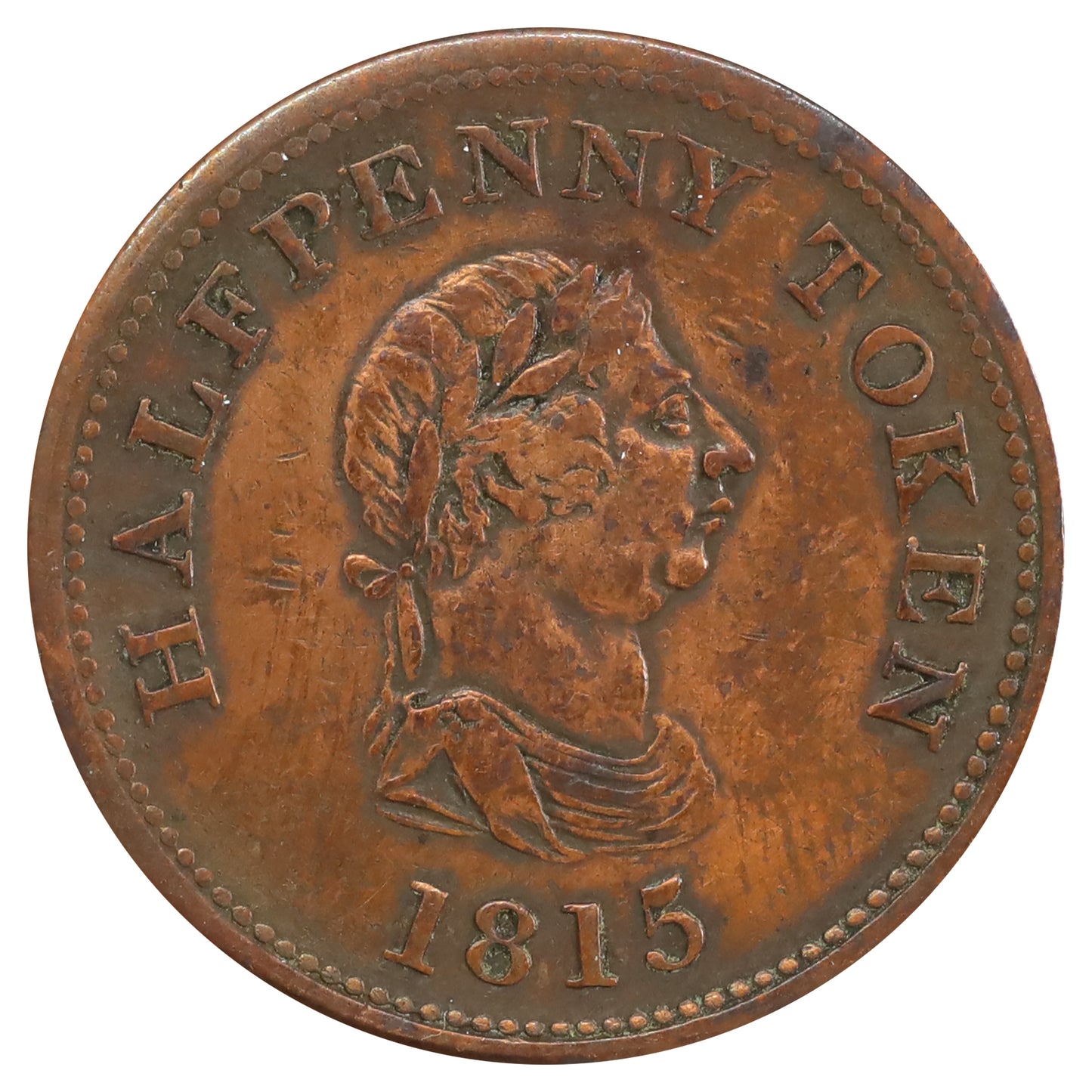
NS-14A5 1815 Nova Scotia John Alexander Barry Halifax Halfpenny Token F-VF (F12) Cleaned
NS-14A5 1815 Nova Scotia John Alexander Barry Halifax Halfpenny Token F-VF (F12) Cleaned
Regular price
$12.95
Regular price
$25.00
Sale price
$12.95
Unit price
per
We buy at $0.00
Shipping calculated at checkout.
◎ Not Available
Couldn't load pickup availability

FREE SHIPPING OVER $500
NS-14A5 1815 Nova Scotia John Alexander Barry Halifax Halfpenny Token F-VF (F12) Cleaned
In 1858, the Province of Canada (now Ontario and Quebec) adopted its own decimal coinage system. The decision was made to follow the United States in the use of dollars and cents, rather than copy Britain with its use of pounds, shillings, and pence. In 1861, Nova Scotia and New Brunswick followed suit with 1-cent and (in Nova Scotia) half-cent coins featuring a distinctive crown and floral wreath made of English roses and Nova Scotia mayflowers. 5-cent, 10-cent, and 20-cent coins followed.
Not to be left behind, Prince Edward Island issued its own decimal cents in 1871. These feature an oak tree and saplings symbolizing mother Britain and her children, the counties of Prince Edward Island.
After Confederation, all provinces adopted a single, unified currency. Maritime coinage was retired -- except in Newfoundland, which would continue using its own currency until it joined Canada in 1949. Maritime coins continue to be unique and sought-after collector's pieces.
In 1858, the Province of Canada (now Ontario and Quebec) adopted its own decimal coinage system. The decision was made to follow the United States in the use of dollars and cents, rather than copy Britain with its use of pounds, shillings, and pence. In 1861, Nova Scotia and New Brunswick followed suit with 1-cent and (in Nova Scotia) half-cent coins featuring a distinctive crown and floral wreath made of English roses and Nova Scotia mayflowers. 5-cent, 10-cent, and 20-cent coins followed.
Not to be left behind, Prince Edward Island issued its own decimal cents in 1871. These feature an oak tree and saplings symbolizing mother Britain and her children, the counties of Prince Edward Island.
After Confederation, all provinces adopted a single, unified currency. Maritime coinage was retired -- except in Newfoundland, which would continue using its own currency until it joined Canada in 1949. Maritime coins continue to be unique and sought-after collector's pieces.